
Russian pavilion at FHC: organising an exhibition in China
A Russian food business wants to exhibit in China and needs more than a rented square of exhibition space. Its presence involves stand construction,…
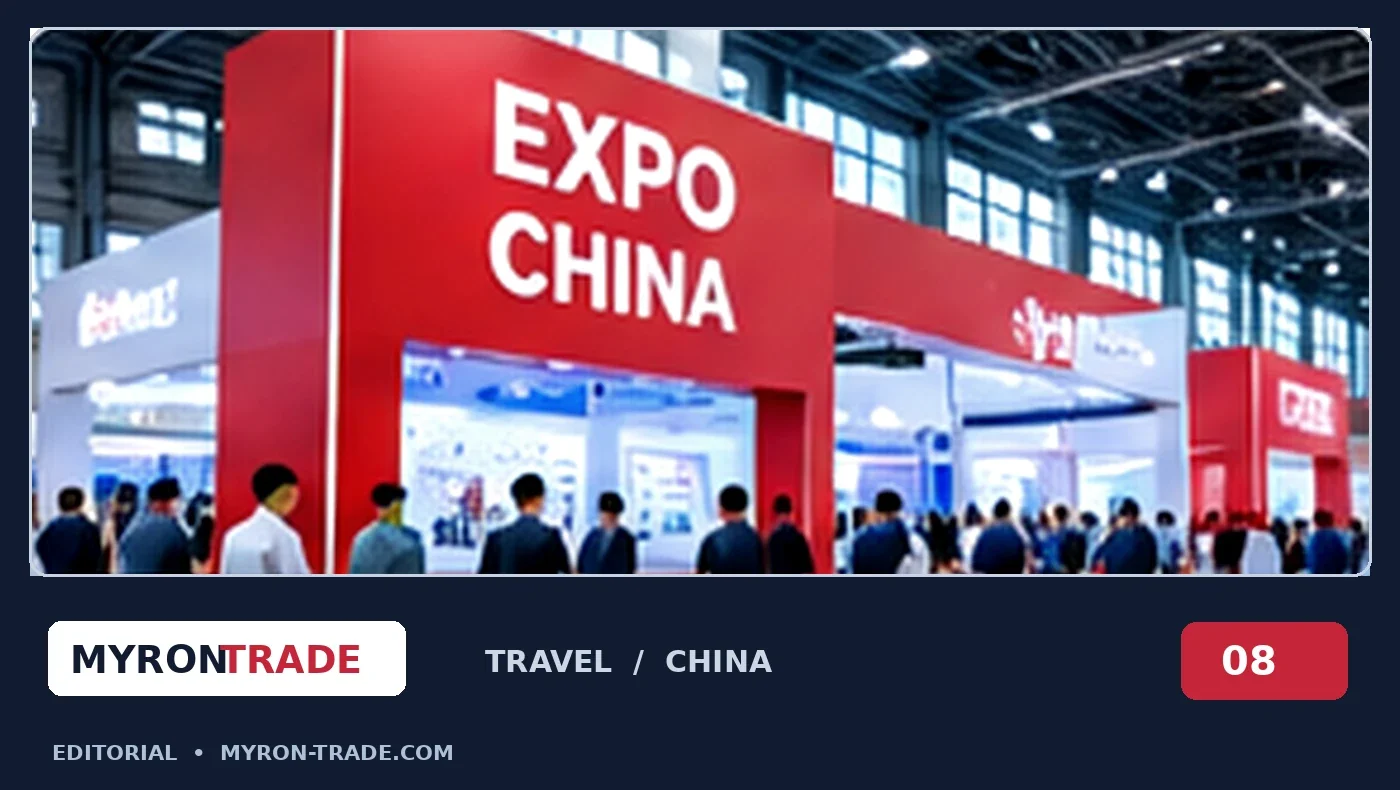
A Russian food business wants to exhibit in China and needs more than a rented square of exhibition space. Its presence involves stand construction, equipment, representatives and conversations with potential Chinese buyers. MYRON TRADE's notes record organising a Russian pavilion at the FHC food exhibition in 2017, a useful example of what local event coordination can involve.
A pavilion is a small project in its own right
Space selection is only the starting point. Exhibitors may need to consider the organiser's building rules, electricity, display equipment, logistics for samples, visual branding and team schedules. Food samples can add category-specific requirements. All arrangements must be checked against the particular fair and year, not assumed from an old event.
According to the company's founder, MYRON TRADE took part in the full organisation of the Russian FHC pavilion. The source notes do not verify its size, number of participants, total budget or resulting contracts. We will not invent sales figures or describe exhibition attendance as a confirmed commercial outcome. The grounded claim is experience coordinating a pavilion on the ground in China.
What turnkey exhibition support covers
The company's service includes selecting and booking space, designing and building the stand, preparing equipment and catering arrangements, finding appropriate personnel and interpreters, and scheduling meetings with potentially useful partners. A group pavilion also needs coordination across participating companies, shared branding, access and logistics.
The exhibitor remains responsible for approving product information, supplying samples, setting prices and appointing people authorised to negotiate commitments. An event organiser cannot independently promise the products' quality or sign terms on behalf of a participant without a proper mandate.
A project timeline worth following
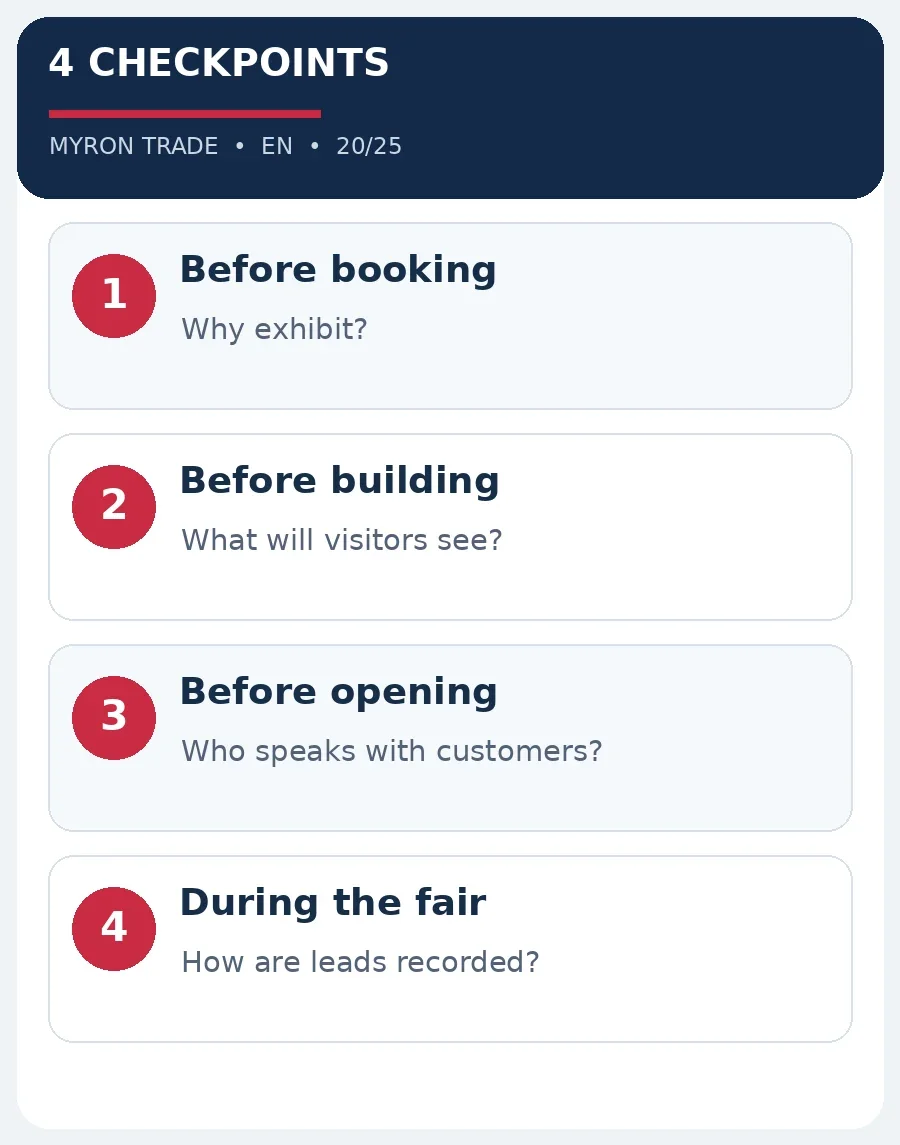
| Stage | Main question | Expected output |
|---|---|---|
| Before booking | Why exhibit? | Objectives and budget |
| Before building | What will visitors see? | Approved design and exhibits |
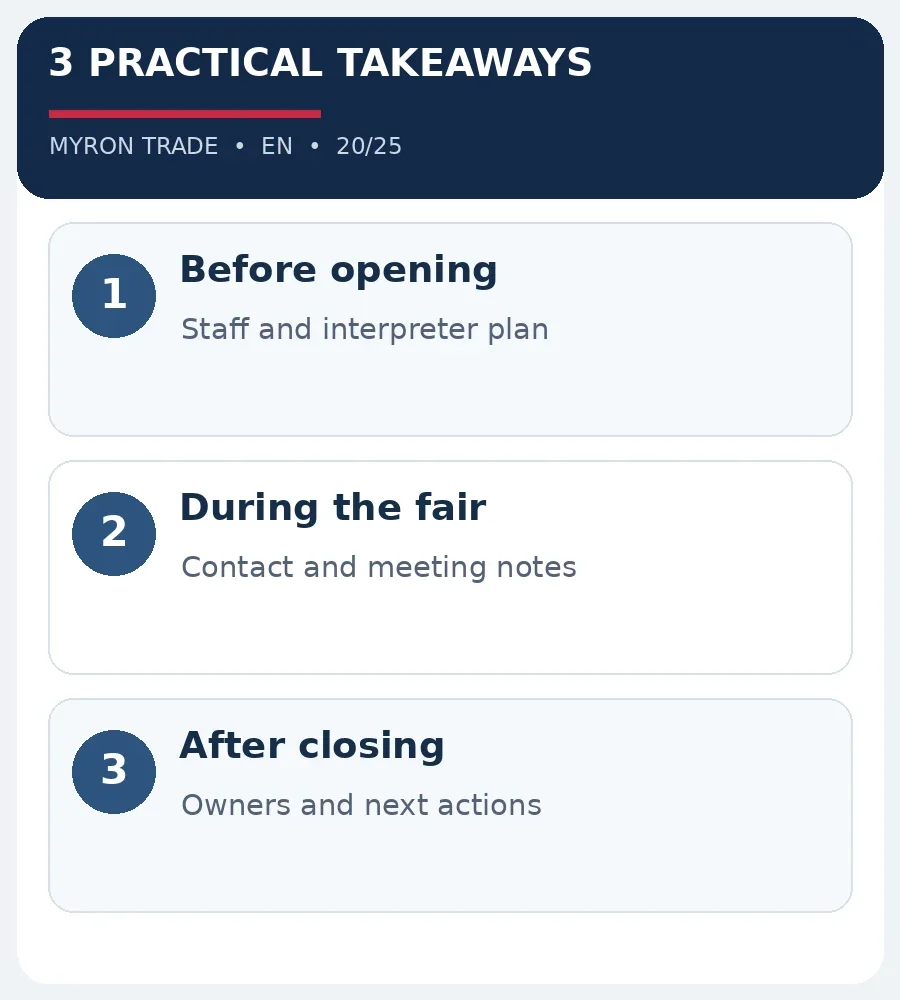
| Before opening | Who speaks with customers? | Staff and interpreter plan |
| During the fair | How are leads recorded? | Contact and meeting notes |
| After closing | Who follows up? | Owners and next actions |
What happens after the doors close
A stack of business cards is not a sales process. Each interested contact should have a recorded need, promised materials and someone responsible for the next conversation. Planning that follow-up before the event is often as important as having a well-designed stand.
MYRON TRADE organises trade fairs and summits in China and can arrange interpreters and factory business visits. The initial brief should name the event, number of exhibitors, required space, products and meeting objectives.
MYRON TRADE services on this topic

Need help with this topic?
Describe the task in your own words — even if you are not sure which service you need. A manager will clarify the details and suggest how to proceed and what it will cost.
What happens next
- A manager clarifies the detailsin the channel you choose
- We propose a work plan and a quotewith an estimate of cost and timing
- We agree the terms and startcontract with our company in Shanghai