
From Russian ice cream to Chinese shop shelves: lessons in retail distribution
Getting a foreign food product through customs is not the same as selling it in China.
Shipping ice cream from Russia to China is not the same as building a business on Chinese shop shelves. A product has to pass the relevant import procedures, travel through suitable cold storage, reach retailers and give local consumers a reason to buy a brand they may never have heard of.
MYRON TRADE participated in the development of a Russian ice-cream brand in China. The work involved distribution and retail negotiations, branded outlets, regional expansion and online marketing. Cities covered in the account include Beijing, Shanghai, Hangzhou, Suzhou, Chongqing, Chengdu and Guangzhou. It was a much broader task than arranging one customs declaration.
Start with the retail price, not the factory price
Manufacturers know their ex-factory cost. But the figure a shopper sees includes freight, import-related costs, cold storage, distribution, retail margins and marketing. A product can look profitable at the factory gate and become difficult to sell after these additional expenses.
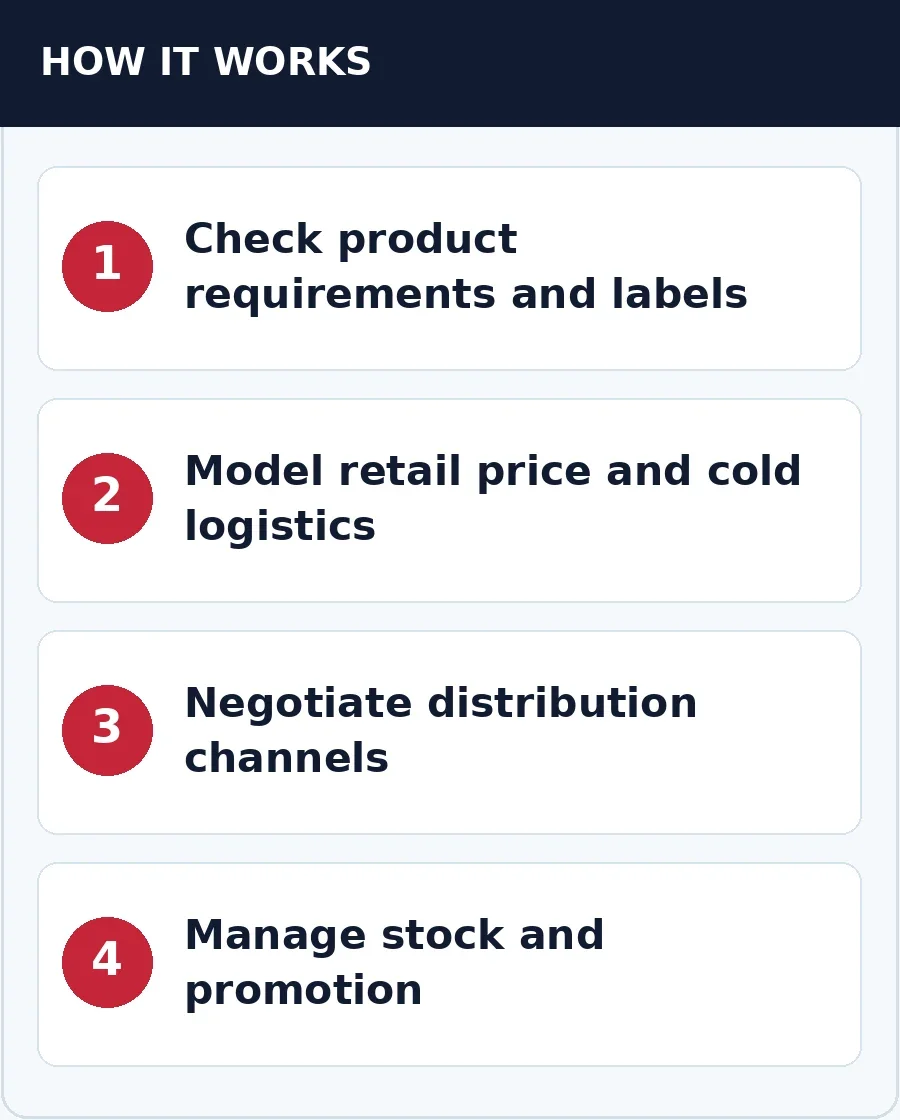
Work backwards from a plausible shelf price. What would a customer pay? What does the retailer need to earn? What costs arise in transport, storage and promotion? Only then can a producer assess whether the intended sales channel makes commercial sense.
Food requirements must also be reviewed for the specific product: composition, labels, documentation and applicable import rules. A procedure that works for one category cannot be assumed to work for another.
A cold chain cannot stop at the border
Ice cream creates an operational constraint: appropriate temperatures are needed beyond the international journey. The product must pass through storage and distribution into a shop able to handle it. Good export packaging alone cannot solve a problem at the destination warehouse or retailer.
Discussions with local partners therefore involve more than price. They should cover receipt of goods, storage capacity, replenishment, returns and the frequency of deliveries. The whole supply route matters.
What the company did in the project
The team took part in negotiations with retail chains and distributors, supported expansion across several cities and helped organise branded points of sale. Online work included Taobao, websites, visibility in Baidu and cooperation with Chinese key opinion leaders, commonly called KOLs.
The owner's working notes also mention the Lawson chain and an estimate of around 5,000 retail outlets reached through the project. We do not present that estimate as a verified commercial performance figure: the period, channel model and supporting records would need to be established first. The more useful point is that distribution requires continuing negotiation, replenishment and consumer demand after the initial listing.
Which sales channel fits the product?
| Route to customers | Main questions | Ongoing responsibility |
|---|---|---|
| Local distributor | Coverage, stock, margins and contractual scope | Repeat orders and availability |
| Supermarket or convenience chain | Listings, promotions and shelf price | Sales performance in stores |
| Branded outlet | Premises, staff, equipment and marketing | Operating costs and customer experience |
| Marketplace | Product pages, fulfilment, ratings and ads | Conversion and repeat purchases |
| KOL or live commerce | Audience, cost and measurable results | Evaluate actual sales rather than views |
A distributor can provide market access but does not automatically create awareness of a new brand. Equally, opening an online storefront does not remove the need for compliant paperwork and reliable logistics.
What a producer should prepare before approaching retailers
Have samples and complete product information ready: ingredients, shelf life, packaging, expected volumes, production capabilities and the documentation relevant to import. Explain what makes the product distinct in a crowded category.
Once distribution starts, monitor sell-through and replenishment, not just the number of stores supplied. Placement on a shelf is a beginning; repeat demand is the commercial test.
A first shipment is not proof of a sustainable market
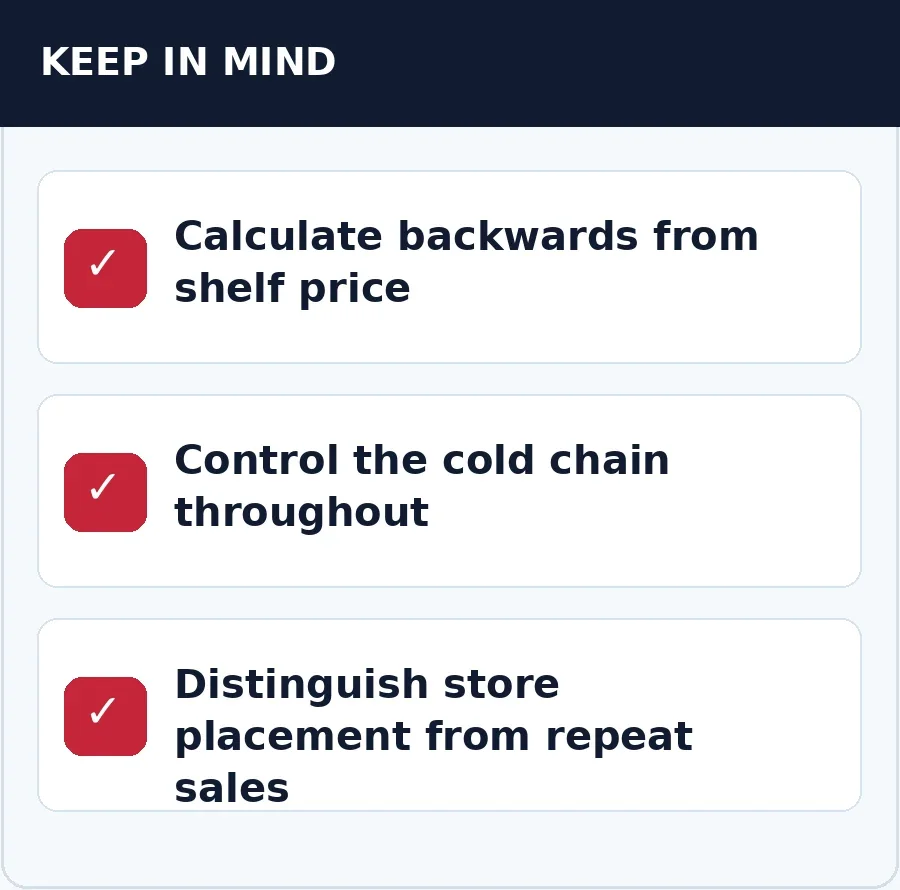
Suppose a distributor accepts a trial batch and several shops place the product on their shelves. That does not establish whether customers will buy it repeatedly. The more meaningful data arrive later: sell-through, remaining inventory, repeat orders and how promotional spending affects demand.
This matters particularly for frozen products, because holding and moving unsold stock is costly. Agree with local partners on the reporting you will receive and how often. If sales disappoint, investigate the possible causes before expanding distribution: price, packaging, brand awareness, placement or the choice of channel. Increasing volume without understanding the problem may simply increase the losses.
How MYRON TRADE approaches market entry
We help businesses examine importing and selling goods in China, identify potential local partners and plan the operational sequence. Depending on the product and model, this may involve warehousing arrangements and legal support for contracts and compliance.
Send us the product description, origin, ingredients, packaging, intended volumes and preferred channels. It is usually wiser to assess the economics and requirements first than promise a supermarket listing before speaking to its purchasing team.


Need help with this topic?
Describe the task in your own words — even if you are not sure which service you need. A manager will clarify the details and suggest how to proceed and what it will cost.
What happens next
- A manager clarifies the detailsin the channel you choose
- We propose a work plan and a quotewith an estimate of cost and timing
- We agree the terms and startcontract with our company in Shanghai