Hiring an interpreter in China: factories, trade shows and negotiations
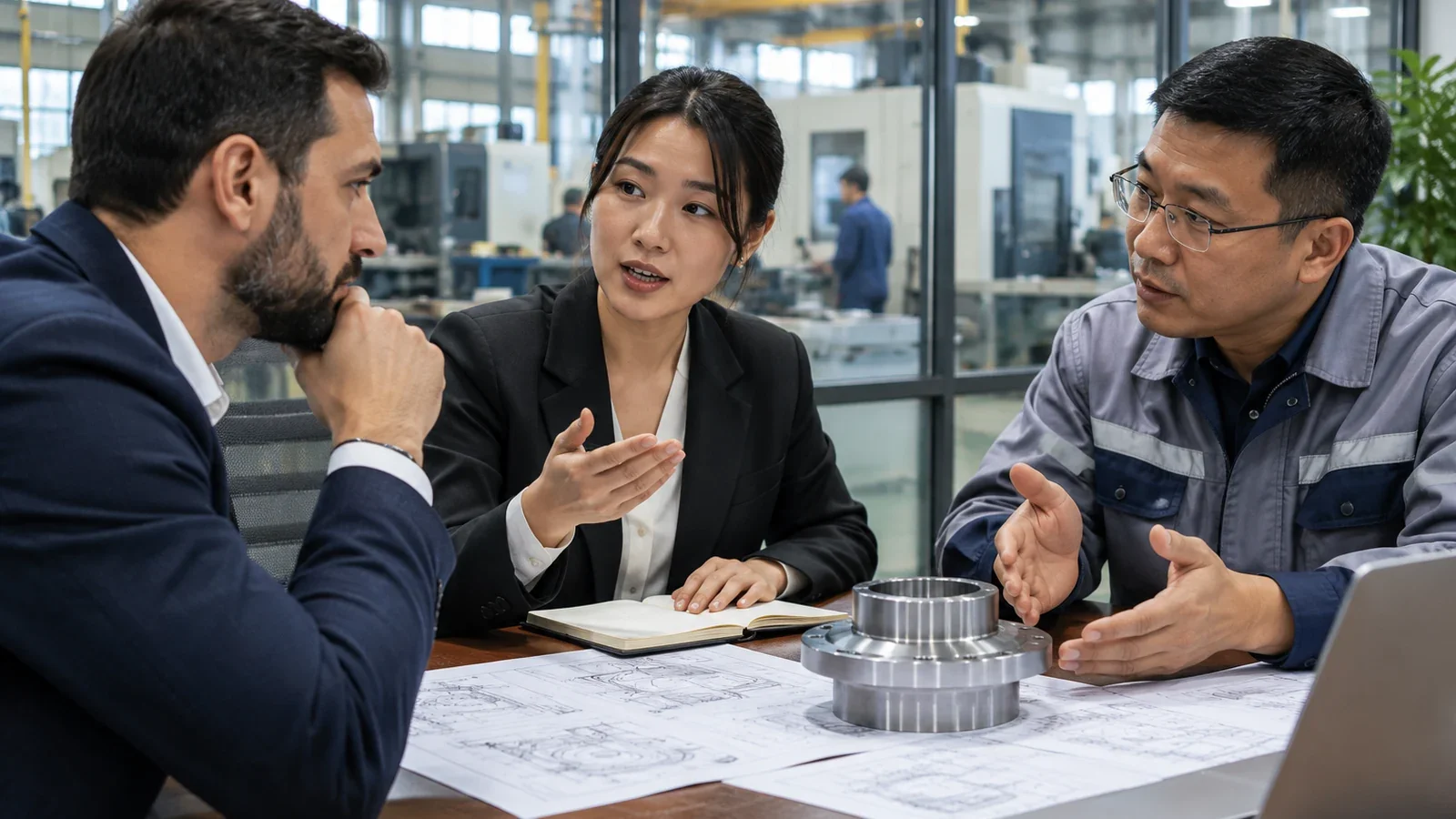
You arrive at a factory in China. The supplier shows you its equipment, answers your questions and quotes a price. Everything seems clear until the conversation turns to what is included, when testing will take place or who will handle modifications. That is when a good interpreter becomes valuable: not to make the meeting sound polished, but to make sure both sides understand the same agreement.
Not every conversation needs an interpreter in the room. Sometimes a WeChat message and a translation app are enough. Here is how to decide when you need a person, what experience to look for and what to prepare before the visit.
When is an interpreter worth booking?
These are the situations clients most often ask us about:
- Supplier negotiations. Pricing, minimum order quantities, samples, lead times, warranty terms and the details of a proposed agreement.
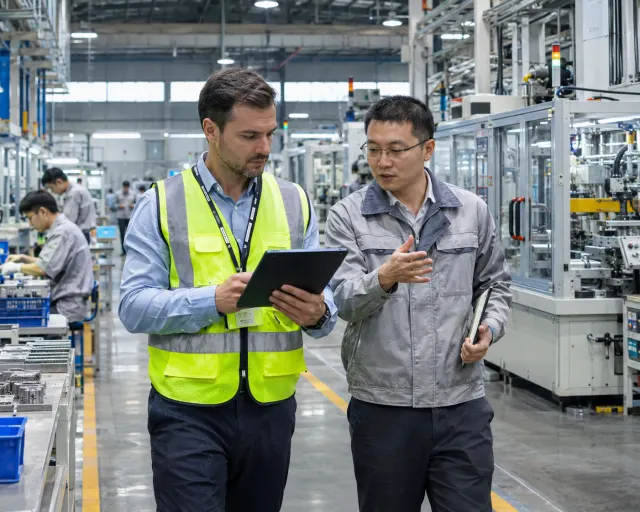
- Factory visits. Understanding what the manufacturer makes in-house, what it sources elsewhere and how finished goods are inspected.
- Trade shows and delegations. Several meetings in one day, new contacts at each booth and important details that must not get lost.
- Everyday matters in China. Speaking with an estate agent, buying a vehicle or attending a medical appointment, where documents, costs and procedures need to be understood accurately.
For a technical visit, subject-matter familiarity matters. Speaking excellent Mandarin and understanding industrial machinery are two different skills.
Translation app or a person beside you?
A translation app is helpful for confirming an address, requesting a catalogue or exchanging a quick message. A commercial negotiation is different. Someone may need to stop the conversation and ask: “What exactly is included in that price?” or “When does the lead-time clock start?”
| Situation | A practical choice | What to watch |
|---|---|---|
| Confirming an address or meeting time | Translation app | Double-check numbers, names and addresses |
| Visiting trade-show booths | An app for quick questions; an interpreter for serious discussions | Prioritise the suppliers you want to speak to in depth |
| Discussing machinery, pricing and delivery | Interpreter familiar with the relevant industry | Share drawings and terminology in advance |
| Negotiating contracts or handling a dispute | Interpreter, plus legal counsel where needed | Language support is not legal advice |
| Medical appointment | Someone familiar with medical terminology | Interpreting is not medical advice |
Neither option is infallible. A prepared interpreter, however, can spot an unclear answer and ask the speaker to explain it before everyone moves on.
What actually happens during a factory meeting?
Imagine a supplier saying that an order “will be ready in 30 days.” That sounds precise until you ask a few more questions. Thirty days from the deposit or from approval of the sample? Calendar days or working days? Does the period include factory testing and packing?
These are ordinary questions. Trouble starts when the two sides assume different answers and then write follow-up emails based on different understandings.
A good interpreter does not make purchasing decisions for you or promise to obtain a discount. The job is to convey both sides' positions accurately, clarify vague replies and make sure important details are not overlooked.
Match the interpreter to the assignment
Instead of starting with “How much is an interpreter for a day?”, explain what you need the person to do. A day of introductory trade-show conversations and a technical inspection call for different skills.
Factories and industrial equipment
Describe the production process. Share a parts list, photographs or technical drawings if you are authorised to do so. Ask whether the interpreter has worked on similar visits. Nobody is equally familiar with every industry.
Trade shows and supplier sourcing
Send the list of booths, the exhibition name and the purpose of each conversation: check the range, request a quotation, discuss samples or arrange a factory visit. This turns an introduction into a useful working meeting.
Personal matters
When renting an apartment, buying a car or visiting a clinic, careful wording and a grasp of local procedures are particularly important. For medical decisions or contracts with legal consequences, consult a qualified professional as well.
What should you send before the meeting?
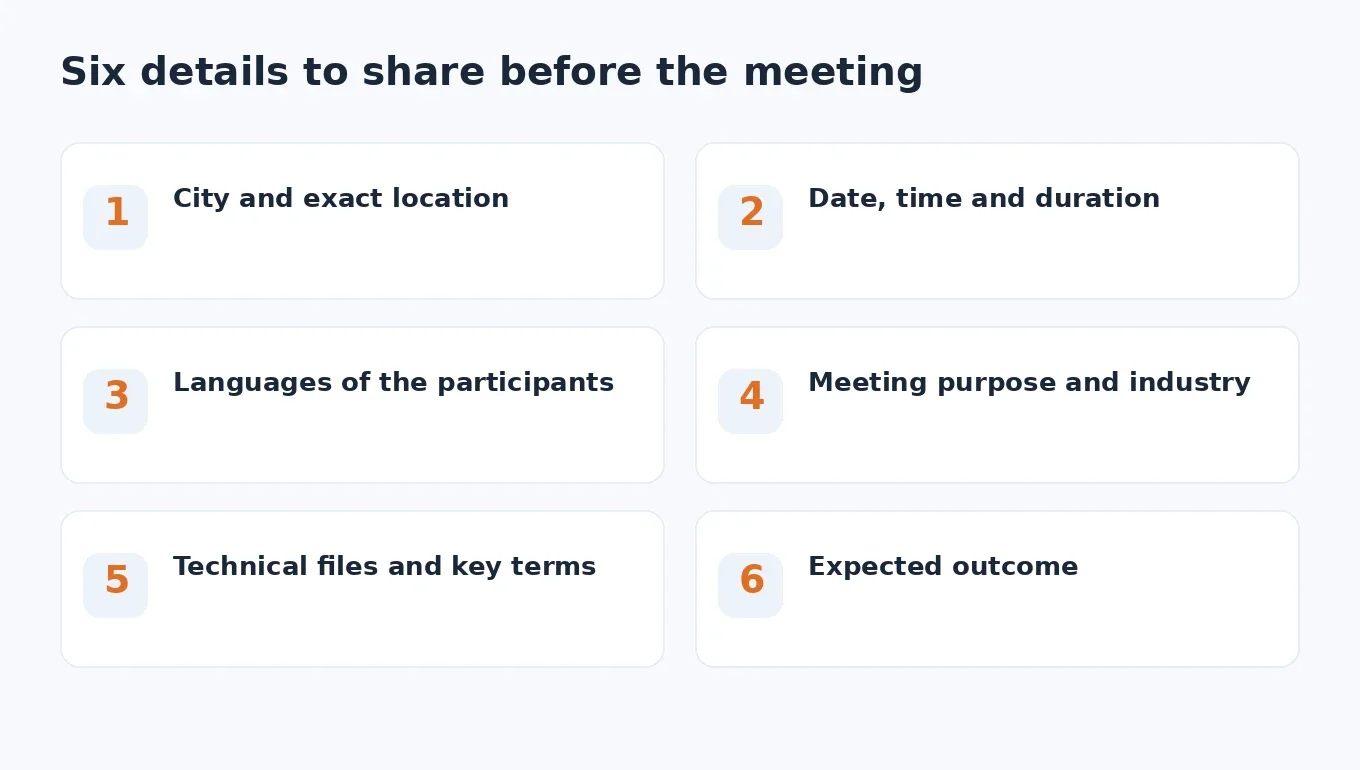
You do not need a twenty-page brief. Six pieces of information are enough to get started:
- City and venue. A meeting in Shanghai and a factory outside the city can involve very different travel arrangements.
- Date and timing. Include the number of meetings and a realistic estimate of their duration.
- Languages. Who will speak which language, and whether you need consecutive interpreting, group support or help with messages.
- Subject and industry. Manufacturing, trading, real estate or another field.
- Materials. Catalogues, drawings, questions, equipment names and key technical vocabulary.
- Desired outcome. For example, answers to ten technical questions, a discussion of samples or agreement on the next steps.
One more practical point: agree on the scope of work. Meeting time, travel, waiting, additional visits and a written summary are not necessarily included in one flat fee. Clear expectations prevent disputes afterwards.
How MYRON TRADE arranges interpreting support
We match an interpreter to the city, languages and purpose of the visit. We work with external specialists and look beyond language ability to communication skills and familiarity with business practices in China.
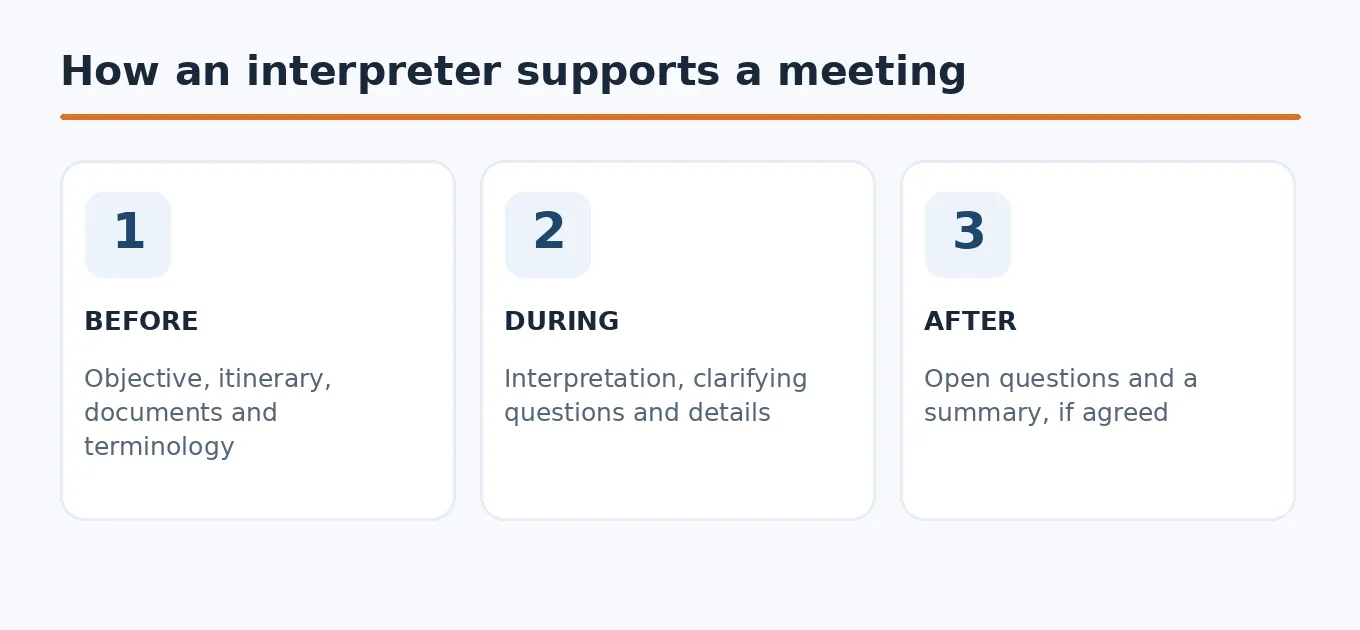
Before the visit, we discuss the assignment and relevant materials. During the meeting, the interpreter helps participants understand one another and clarify details. Afterwards, a written list of open points or a short summary can be arranged separately if needed.
If you are meeting a new factory for the first time, consider verifying the supplier as well as booking an interpreter. For recurring projects, a representative based in China may be more practical than arranging each visit separately.
You may also find our guide to distinguishing a factory from an assembly workshop or trading company useful. The importer should link to it only if the relevant language version is published.
Booking an interpreter in China
Tell us the city, date, languages and purpose of your meeting. If you already have an itinerary, a list of factories or technical files, send them with your enquiry. We can then discuss the right kind of support and the practical arrangements.
Need an interpreter in China? Explore MYRON TRADE's interpreting and meeting-support service, or send us a short description of your requirements.
Read also
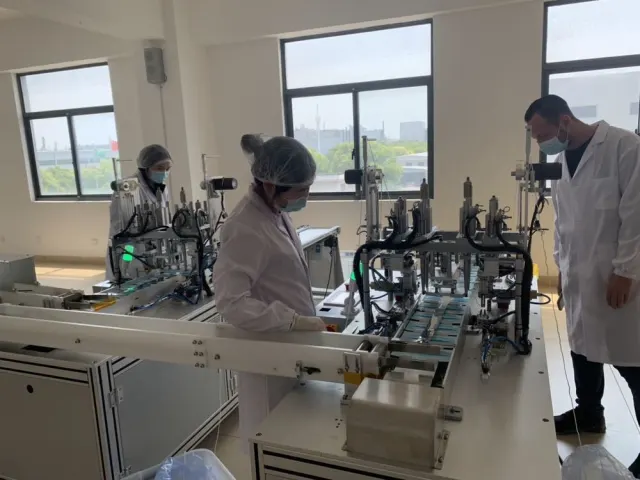
Factory, assembly workshop or trader: who you are really dealing with and what an on-site check shows
Related service: Supplier verification
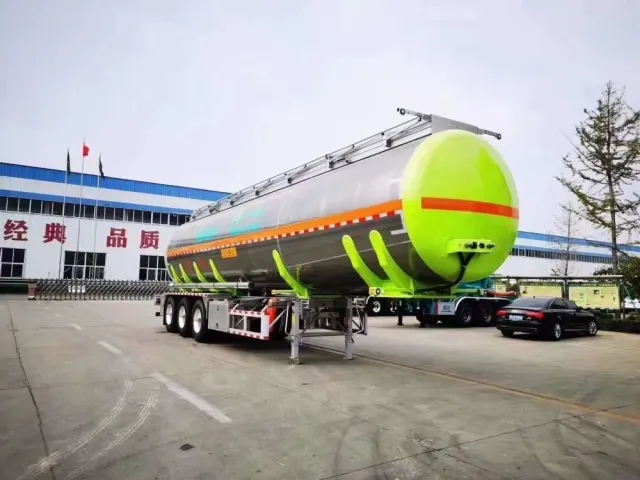
How to find a factory in China for a non-standard production line
Related service: Supplier search
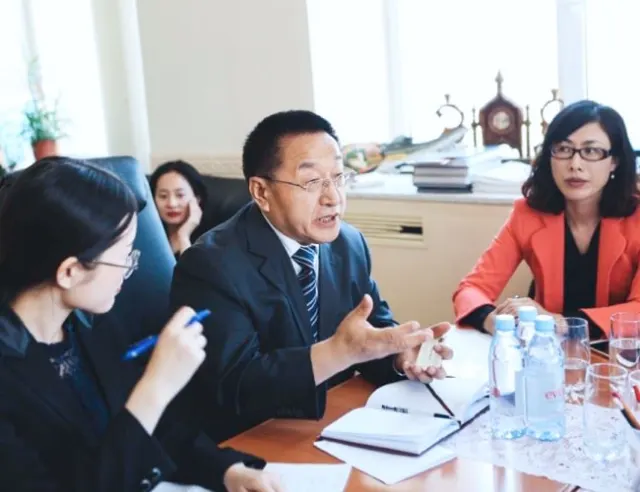
Human Interpreter or Translation App for Negotiations in China: Where a Phone Is Enough and Where It Is Not
Related service: Interpreters
Need help with this topic?
Describe the task in your own words — even if you are not sure which service you need. A manager will clarify the details and suggest how to proceed and what it will cost.
What happens next
- A manager clarifies the detailsin the channel you choose
- We propose a work plan and a quotewith an estimate of cost and timing
- We agree the terms and startcontract with our company in Shanghai