
How to find a factory in China for a non-standard production line
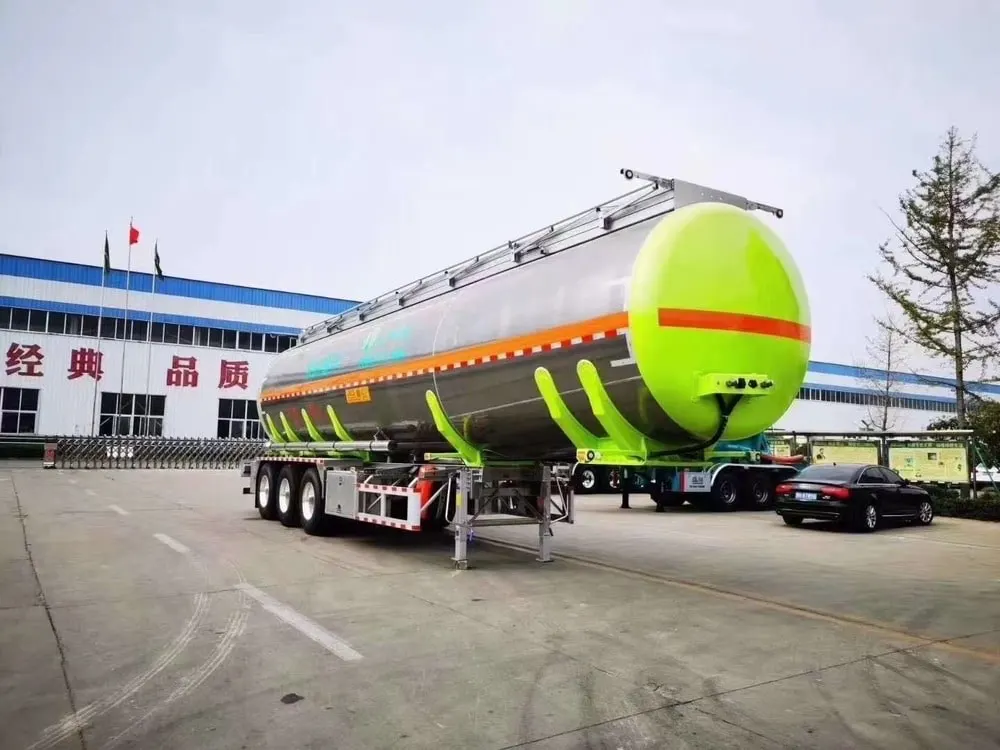
A factory needs a final drawing before it can price a production line. After that you need several factories, not one, and a visit to a line that is already running. This is what to prepare before your first message, and how it went for our client who started with a layout from someone else's materials.
A drawing from the internet is not yet a brief for a factory
Say you have decided to start a production site. You found a layout of the line online, and an engineer you know gave you a rough capacity. It looks like one step is left: send an enquiry to a few factories and pick the cheapest.
It rarely works that way. A factory that builds equipment to order calculates it from a final drawing. No drawing means no calculation, and so no honest price. That is why the search for a line begins with a question to yourself: do I have a document from which anything can actually be built?
The second feature is that a line is made of units, and different companies often make them. Someone has to tie them into one system, and not everyone is ready to answer for that. The companies that send you a polished offer will include factories, integrators (they assemble a line from other people's units and answer for how they fit), makers of single units, and plain trading companies.
A catalogue will not help here. It shows what a company sells, not what it can build. We wrote about telling a real manufacturer from a reseller in finding reliable manufacturers in China. For a line that is not enough, so here is what else to do.
What to prepare before the first message to a factory
The fuller the package, the more precise the answers. This is what we ask our clients for, and why.
What you want to make. The product, the raw material and the quality requirements for the finished goods. The whole line depends on this.
Capacity, always with a period. A line for an hour of work and a line for a full day differ in size and price. A factory cannot calculate a number without a period.
The drawing and where it came from. Was it made for you, supplied by an engineer, or found in third-party materials? If you are not sure it suits you, say so. That decides whether you need engineering work first.
The standards of your country. A factory in China does not know your local equipment rules until you name them.
Budget. The order of magnitude and what it includes: equipment alone, or installation and commissioning as well.
Timing and your own involvement. Do you need only a supplier, or also someone to run the work afterwards?
If some items are still empty, do not postpone the search. But then engineering work becomes the first step, not an optional extra.
Keep the first message short: what kind of line, the attached package and three questions. What similar lines has the factory built? Is it ready to show one of them? What else does it need from you to calculate? The answers tell you more about a factory than a company presentation.
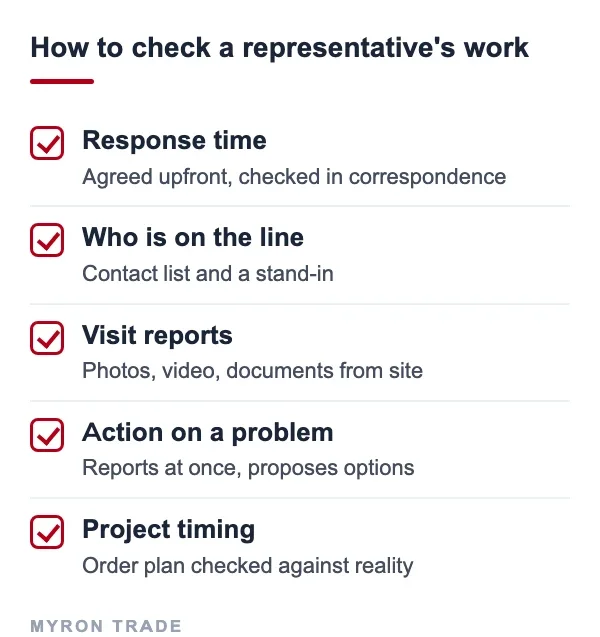
How it went for one of our clients
From our practice
An entrepreneur came to us who wanted to build a production line: process raw material and make a product from it. He could not find a contractor in China on his own. He had a layout from third-party materials and no certainty that it suited him. We do not name him or his country.
Through our industry contacts in China we found companies that make the units for a line like this. All of them answered the same way: we need a final drawing. Without it the equipment can be neither calculated nor built.
We brought in engineering specialists and gave them the source materials and the capacity required. They looked at the layout and judged it excessive. In their estimate, a compact configuration could cost less. That is an estimate made at the engineering stage, not a saving anyone has counted.
Then we negotiated with five manufacturers of units: feeding systems, control elements and other equipment. We did not choose on the lowest price. One of the five already had a similar line running. We assume the client's layout came from that very line, but we do not know it for certain.
We arranged the client's trip to that line. He inspected it in person, chose the supplier and paid for our search and engineering work.
The project then stopped for about six months because financing fell through. When the client came back, he asked us to represent him. We talk and interpret between him and the factories, watch the manufacturing of the units, and take part in trial assembly, tests and quality control before shipment. Installation on site is organised through Chinese specialists, who work with interpreters.
We do not call the project finished. We are describing the stages already passed.
What to take from this story
First, the drawing was a condition, not a formality. The factories did not guess, and they were right. If you have a layout from someone else's materials, check it first and show it to factories afterwards.
Second, engineering comes before choosing a factory. Engineers check the idea as well as the drawing: is this layout needed for this capacity at all? It is better to settle the configuration before the order, while the units are not yet made.
Third, price should not come first. Five offers for different configurations cannot be compared by price. A polished offer proves willingness to sell, not experience. We looked at who had already built something similar and was ready to show it.
Fourth, go and see an operating site. A quotation describes intentions, a running line shows a result. On site you see how the units fit, what state the equipment is in after use, and how raw material goes in and product comes out. You can check it against your own drawing.
Prepare questions for the owner of the line in advance. When was it assembled? What was replaced or reworked after start-up? What was hard at commissioning? What would he do differently? The answers help you correct your own project before you order.
There are limits. The owner decides whether to let you in, and sometimes the answer is no. A visit does not guarantee that your order will turn out the same. It removes part of the uncertainty, and the rest is covered by the contract, a check of the company before payment and supervision of manufacturing. If a candidate can neither name nor show a single working installation, that is an answer too.
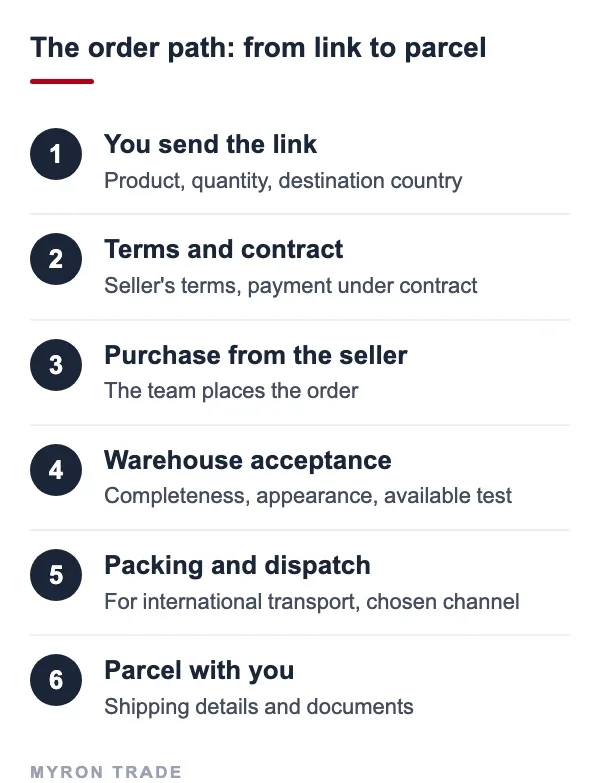
Put in order, the path looks like this.
What starts after you choose a factory
For a line, the contract is not the finish. Manufacturing of the units, trial assembly, tests, checks before shipment and installation all follow. At each stage you need someone who speaks to the factory every day in its own language and understands what he sees on the shop floor.
A client often cannot stay in China for months. In our project a representative took this part on. How it works is described on the page representative in China.
Where we help
In supplier and manufacturer search we first sort out the task: what to make, volumes, standards, budget, drawings and timing. Then we search through industry contacts and professional communities in China and separate factories from integrators and trading companies. If the technical brief is incomplete, we help find an engineering partner. We arrange introductions to operating projects and a visit, run the negotiations and, if needed, support the manufacturing that follows. Describe the equipment you need, and we will tell you where to start.

Need help with this topic?
Describe the task in your own words — even if you are not sure which service you need. A manager will clarify the details and suggest how to proceed and what it will cost.
What happens next
- A manager clarifies the detailsin the channel you choose
- We propose a work plan and a quotewith an estimate of cost and timing
- We agree the terms and startcontract with our company in Shanghai