
Chinese import labels and documents: preparing a foreign product
An overseas brand has a buyer interested in its products in China and is ready to print packaging for the first shipment. Then a question arises: do the…
An overseas brand has a buyer interested in its products in China and is ready to print packaging for the first shipment. Then a question arises: do the label, ingredients and documents satisfy the requirements for that specific category? Preparing a product for the Chinese market should begin before thousands of cartons are printed, not after the goods reach customs.
Check the category before designing the label
Food, cosmetics, alcoholic beverages and other products can face different regulatory requirements. These may concern ingredients, registration or notifications, required labelling, approvals, tests and permissible claims. There is no universal Chinese-market sticker suitable for every shipment. The first task is to classify the product properly and have current, category-specific requirements checked through competent professional channels.
MYRON TRADE's market-entry work is described as a sequence: product and audience assessment, import conditions, economic calculations, localisation, distribution discussions and marketing. The team has participated in bringing a Russian ice-cream brand to Chinese retail and has experience with other consumer products. Yet the requirements for ice cream cannot automatically be applied to juice, cosmetics or wine.
Commercial feasibility belongs in the same discussion
A compliant package is not enough if the retail price becomes unattractive once freight, customs charges, storage, distribution margins and promotional expenditure are included. Different retail channels may also prefer different formats and pack sizes. Consumers need clear, accurate local-language information rather than a literal translation of advertising from the home market.
Before shipment, clarify the role of the Chinese importer, the distribution model, storage conditions, shelf life where relevant, sample requirements and the documentary chain. Temperature-controlled products need a separate cold-chain plan. Otherwise, problems are transferred to the most expensive part of the process.
A practical pre-import checklist
| Workstream | Question | Likely output |
|---|---|---|
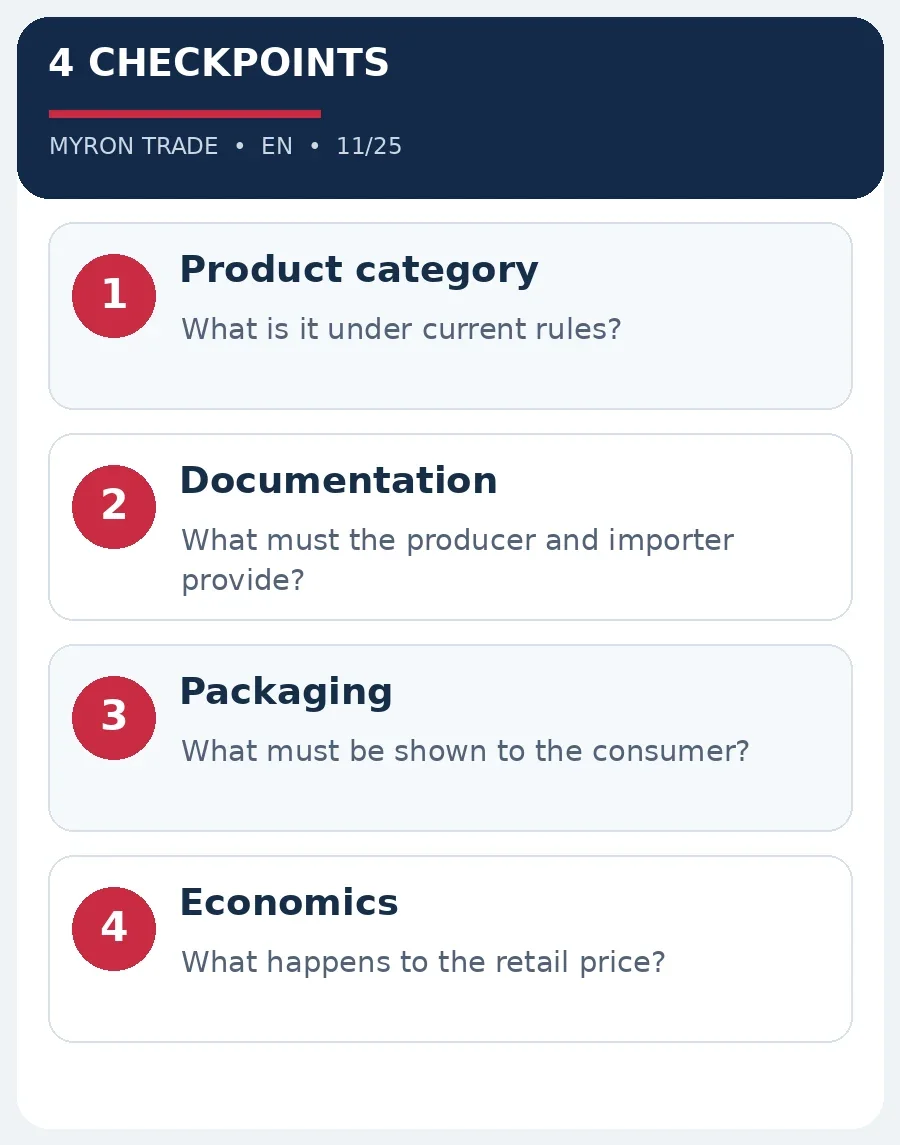
| Product category | What is it under current rules? | Regulatory assessment |
| Documentation | What must the producer and importer provide? | Applicable evidence and filings |
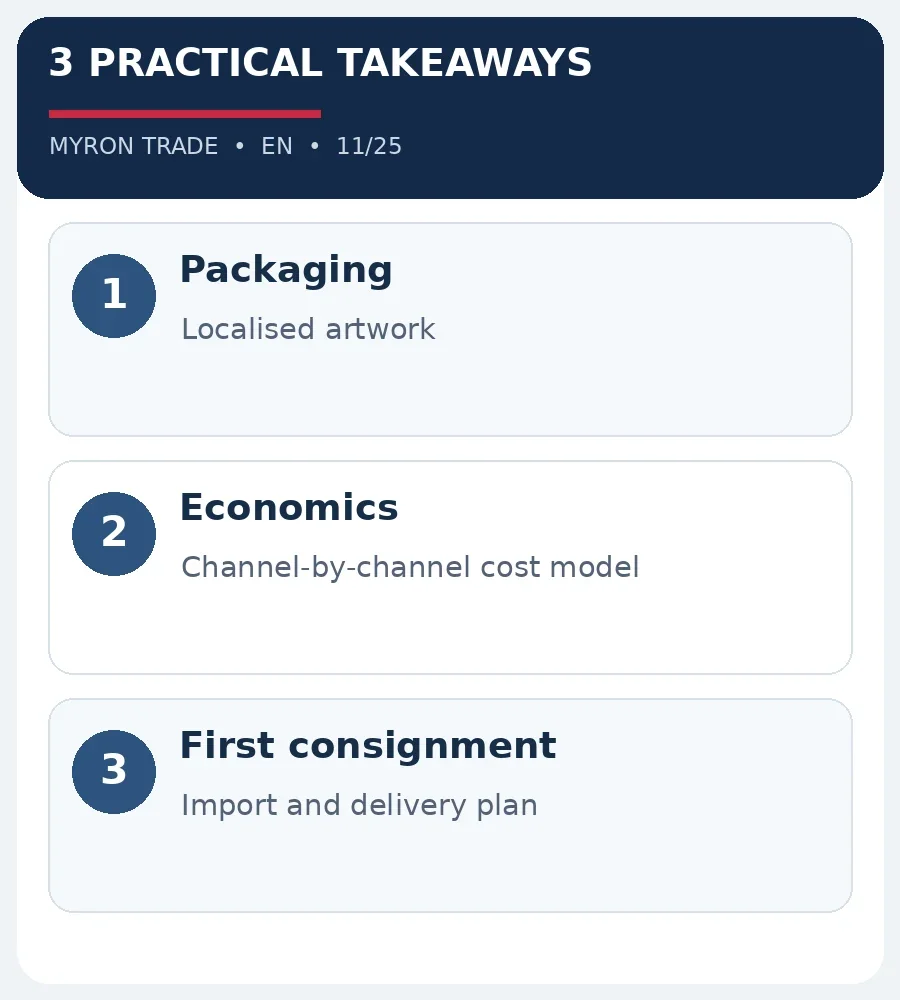
| Packaging | What must be shown to the consumer? | Localised artwork |
| Economics | What happens to the retail price? | Channel-by-channel cost model |
| First consignment | Who stores and distributes it? | Import and delivery plan |
Localisation is more than changing the language
Consider product naming, permitted claims, label placement and the sales channel's expectations. Another connected question is trademark protection: a brand promoted in China without considering its local intellectual-property position may create additional exposure once demand develops.
MYRON TRADE can assist with market entry and imports into China, with related trademark registration and warehousing where appropriate. Provide a product specification, ingredients or materials, country of origin and target price for an initial project-specific review.
Need help with this topic?
Describe the task in your own words — even if you are not sure which service you need. A manager will clarify the details and suggest how to proceed and what it will cost.
What happens next
- A manager clarifies the detailsin the channel you choose
- We propose a work plan and a quotewith an estimate of cost and timing
- We agree the terms and startcontract with our company in Shanghai