
350 sauna heaters: how a pre-shipment inspection uncovered faulty units

What changed when four out of the first ten sauna heaters failed during inspection.
A shipment of roughly 350 electric sauna heaters appeared ready to leave the factory. The buyer had asked us to test 50 units before dispatch. That seemed a sensible inspection plan until our inspector switched on the first ten heaters.
Four of those ten failed. Some would not heat; others shut down after running for a while. There were sensor-setting problems, and wiring burned in one unit during start-up. At that point, the inspection was no longer a routine sign-off. The buyer needed to understand how far the problem extended before a container of potentially faulty equipment crossed the border.
The first ten tests changed the decision
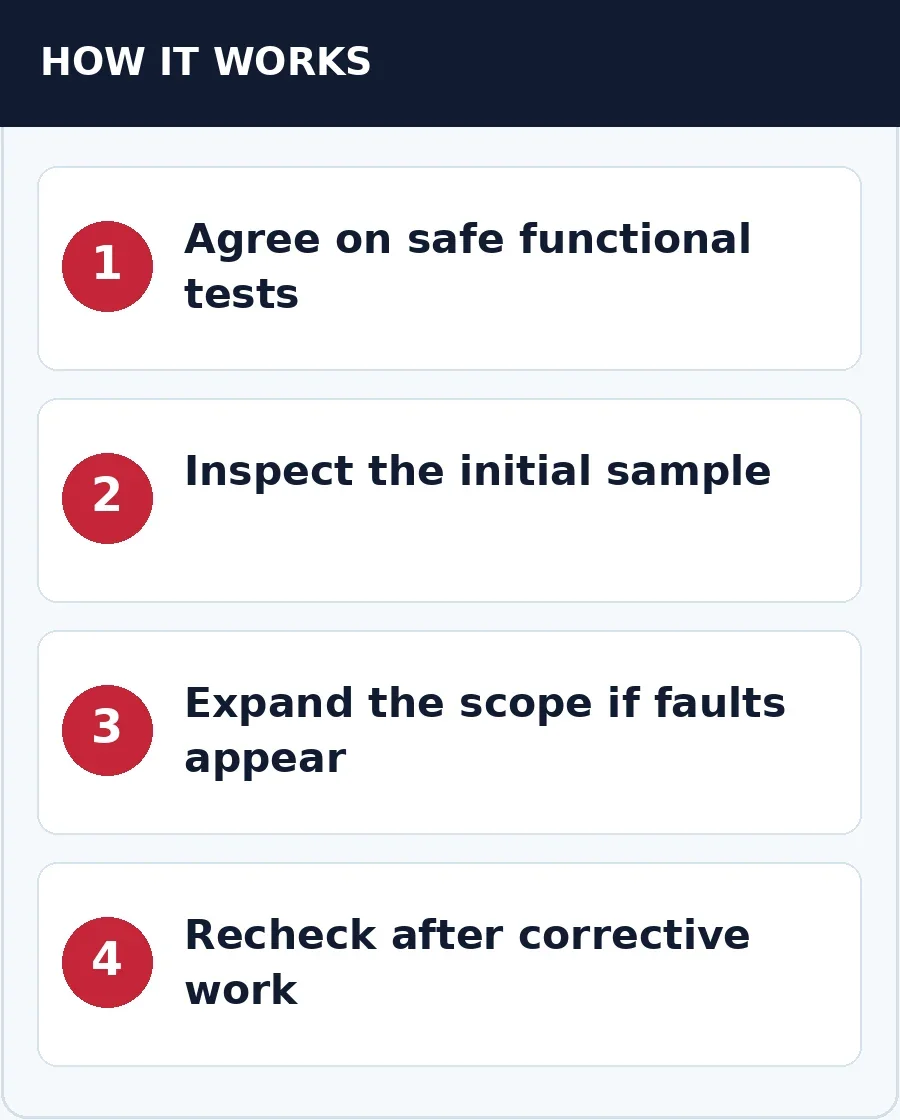
The original assignment went beyond looking at the packaging. Our inspector was to connect 50 heaters and check whether they started and worked as expected. Functional tests matter because a clean housing and a complete carton say little about the performance of an electrical appliance.
We shared photographs, video and descriptions of the faults as testing progressed. The client did not have to wait until the final report, or until the cargo arrived overseas, to make a decision. After seeing the initial findings, the client asked us to inspect the entire batch rather than stop at the planned 50 units.
Four failures in the first ten do not establish the defect rate for all 350 heaters. Nor do they say anything meaningful about the quality of Chinese manufacturing in general. They did, however, provide a clear reason to widen the check on this particular order.
What a full inspection involved
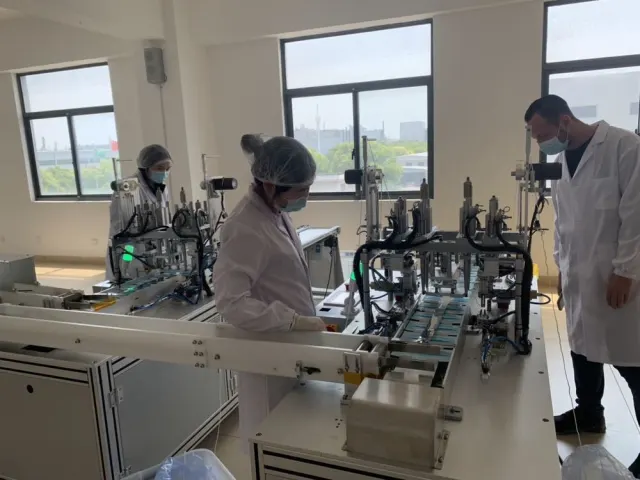
Two more specialists joined the first inspector. Three people worked for about three eight-hour days, checking approximately 350 heaters. Each required connection to power and observation of its behaviour. Where appropriate, the team also examined the unit internally.
This was not a quick exercise in counting cartons. An appliance may power on but fail once heating begins, or switch off after several minutes. Before testing, the buyer and inspector should agree on a safe procedure, suitable power supply, pass/fail criteria and whether opening a housing is permitted.
A factory test cannot guarantee that a heater will work flawlessly for years. It can, however, identify obvious problems before the buyer pays to ship the faulty goods abroad and faces a much more difficult discussion with the manufacturer.
A practical inspection checklist
| Inspection point | Potential finding | Evidence to record |
|---|---|---|
| Power-on and heating | Unit does not start or fails to heat | Unit reference, test conditions, video |
| Sensors and controls | Incorrect settings or unexpected shutdown | Error code and sequence of events |
| Electrical components | Faulty connections or damaged wiring | Photographs and a safe technical assessment |
| Completeness | Missing parts, leads or documentation | List of missing items |
| Packaging | Inadequate protection for the journey | Photographs of cushioning and labels |
The exact tests must suit the equipment and the manufacturer's documentation. Some inspections require specialist instruments or qualified personnel. A pre-shipment check is not a substitute for product certification or laboratory testing.
What the manufacturer did next
We reported the findings to the factory. The manufacturer acknowledged that corrections were needed and spent approximately 10–14 days addressing them. Our team then returned to inspect roughly 350 heaters again. The problems identified earlier had been resolved in the reinspection.
We also supported discussions about a discount and the factory covering the inspection costs. That arrangement was negotiated in this case; it is not an automatic entitlement whenever defects are found. Contract terms, evidence and the parties' positions still matter.
The central lesson is the timing. The client learned about the failures while the heaters were still in China, had the chance to expand testing and could request repairs before the shipment left.
Three useful inspection points
During manufacture. For complex products, checking initial units can reveal recurring issues while there is still time to change the process.
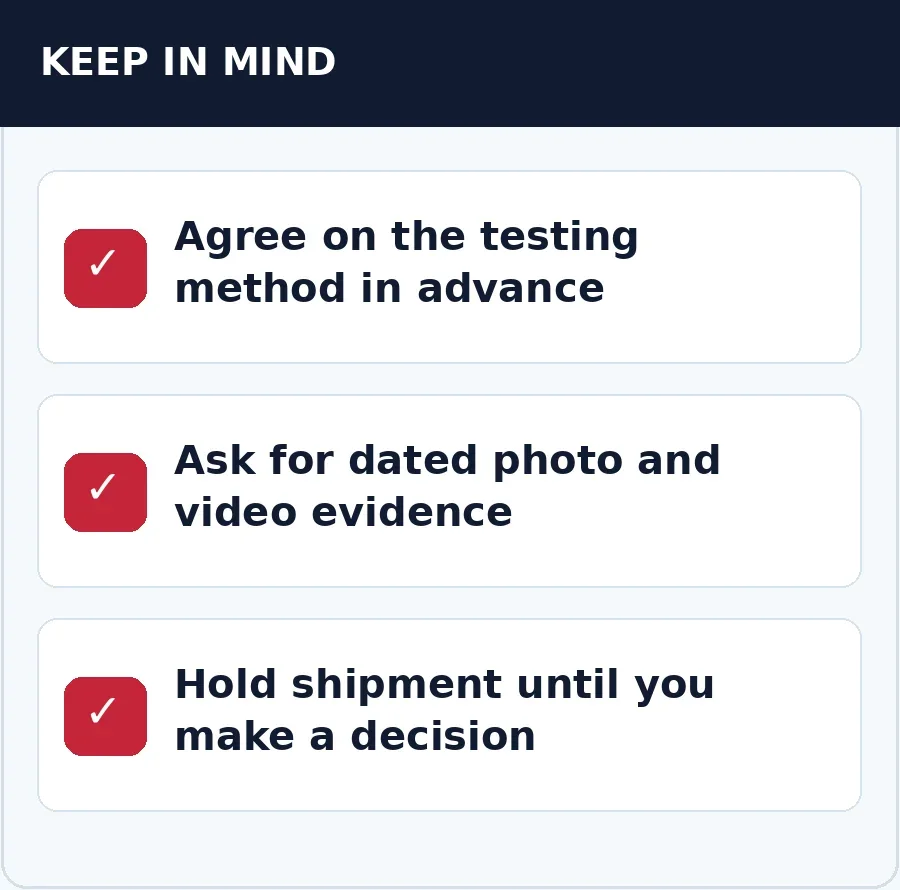
Before final payment or dispatch. Confirm quantities, specifications, working condition and packaging. Agree in advance whether functional testing is required, rather than assuming that visual checks are enough.
After corrective work. A manufacturer's email saying that everything has been fixed is different from a second test. Significant defects are a good reason to plan a reinspection.
What if the factory disputes the inspection result?
A manufacturer may argue that the inspector used the wrong power supply, misunderstood a setting or did not follow the operating instructions. That is not always a meaningless excuse: test conditions really do matter for electrical equipment. Agree on the procedure with the supplier beforehand. If a failure is discovered, record the unit reference, sequence of actions and evidence so it can be reproduced and discussed clearly.
It should also be clear who authorises shipment. The inspector documents findings, the manufacturer proposes corrections and the customer decides whether to accept the outcome. A factory's assurance that repairs have been completed should not automatically count as approval to dispatch a large order.
What to send an inspector before the visit
Provide the order specification, model list, voltage requirements, agreed sample, functional criteria and the definition of a critical fault. State the number of units to check, the reporting format and who can approve an expanded inspection. If a test takes time, allow for it in the schedule.
MYRON TRADE provides quality control inspections in China under an agreed scope and documents findings so the customer can make informed decisions. If your concern is whether the supplier is a real manufacturer in the first place, factory and supplier verification is a separate service that answers different questions.


Need help with this topic?
Describe the task in your own words — even if you are not sure which service you need. A manager will clarify the details and suggest how to proceed and what it will cost.
What happens next
- A manager clarifies the detailsin the channel you choose
- We propose a work plan and a quotewith an estimate of cost and timing
- We agree the terms and startcontract with our company in Shanghai