Sampling or 100% inspection in China: choosing the right scope
A buyer orders 500 units and asks a Chinese inspector to “check quality”. Does that mean opening five cartons, testing 50 items or examining every unit?
A buyer orders 500 units and asks a Chinese inspector to “check quality”. Does that mean opening five cartons, testing 50 items or examining every unit? Unless the method is specified, supplier and buyer may expect very different outcomes. Sampling and 100% inspection are separate tools, with different costs and limits.
What sampling is designed to establish
For sufficiently uniform goods, parties may agree on a selection procedure, critical defects and rules for accepting or escalating results. Sampling reduces the number of units tested while providing evidence about the sampled batch under the chosen method. It does not prove that every untested item is defect-free. A formal statistical plan should be selected for the product and risk, not invented without technical basis.
A complete inspection tests each unit against defined criteria. It may be justified after a serious defect appears, for costly equipment or where failure has substantial consequences. Yet even examining every item does not guarantee detection of hidden faults or replace specialist certification.
How a real order changed course
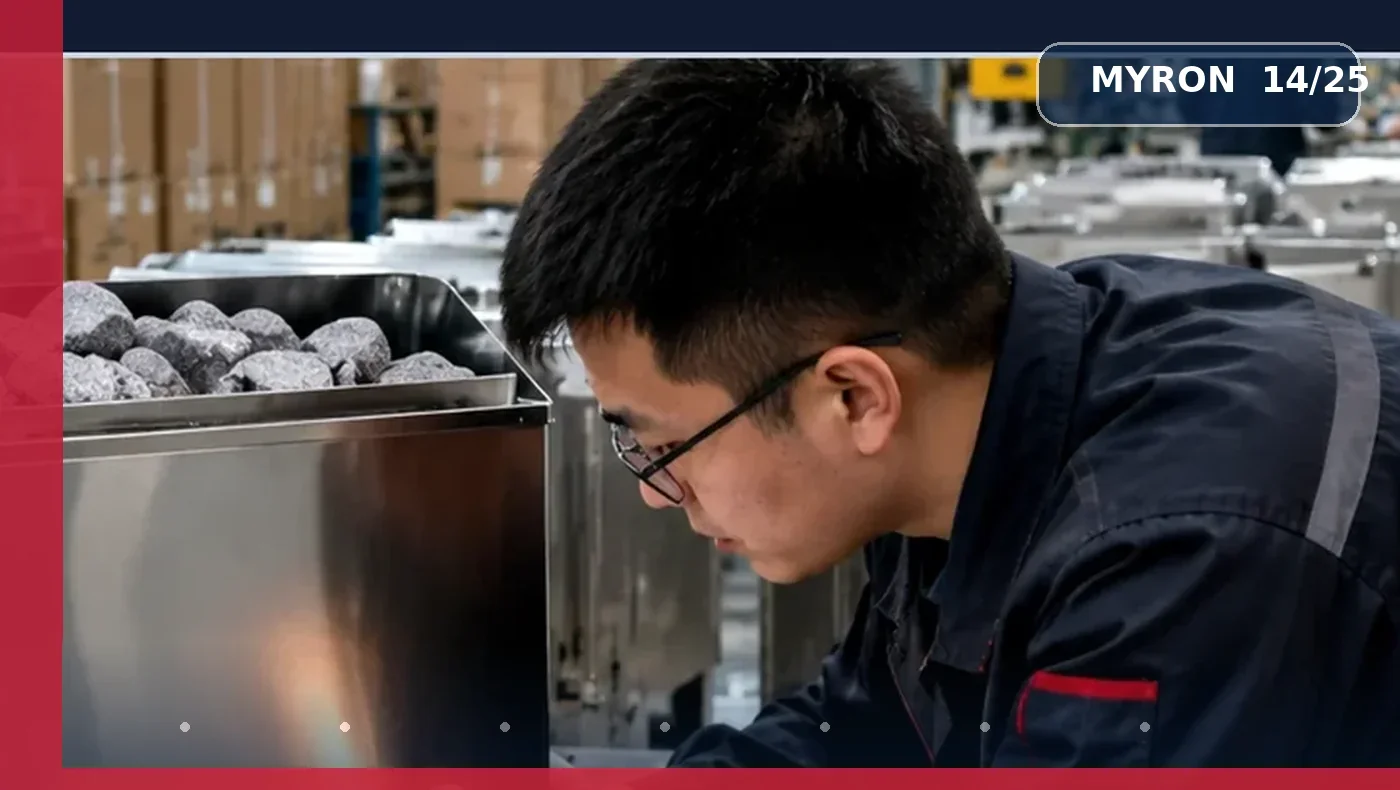
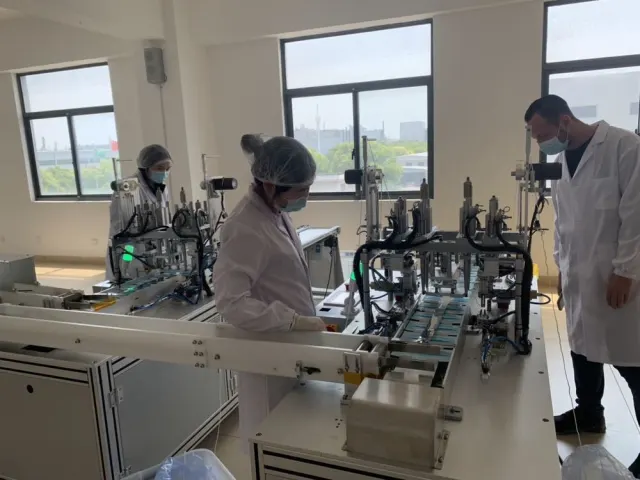
MYRON TRADE's notes describe roughly 350 electric sauna heaters. The customer initially asked for 50 units to be checked. Of the first ten, four did not function properly. The buyer therefore requested testing of the whole batch, and two additional inspectors joined the first. Testing took about three working days because the appliances needed power, time to heat and sometimes access inside their casings. After factory corrections, the batch was inspected again.
The lesson is not “always inspect everything”. It is to retain the ability to expand the scope when evidence justifies it. The price of extra days, staff and repeat visits should be understood before production reaches its deadline.
Choosing a suitable scope
| Question | Sample inspection | Every-unit inspection |
|---|---|---|
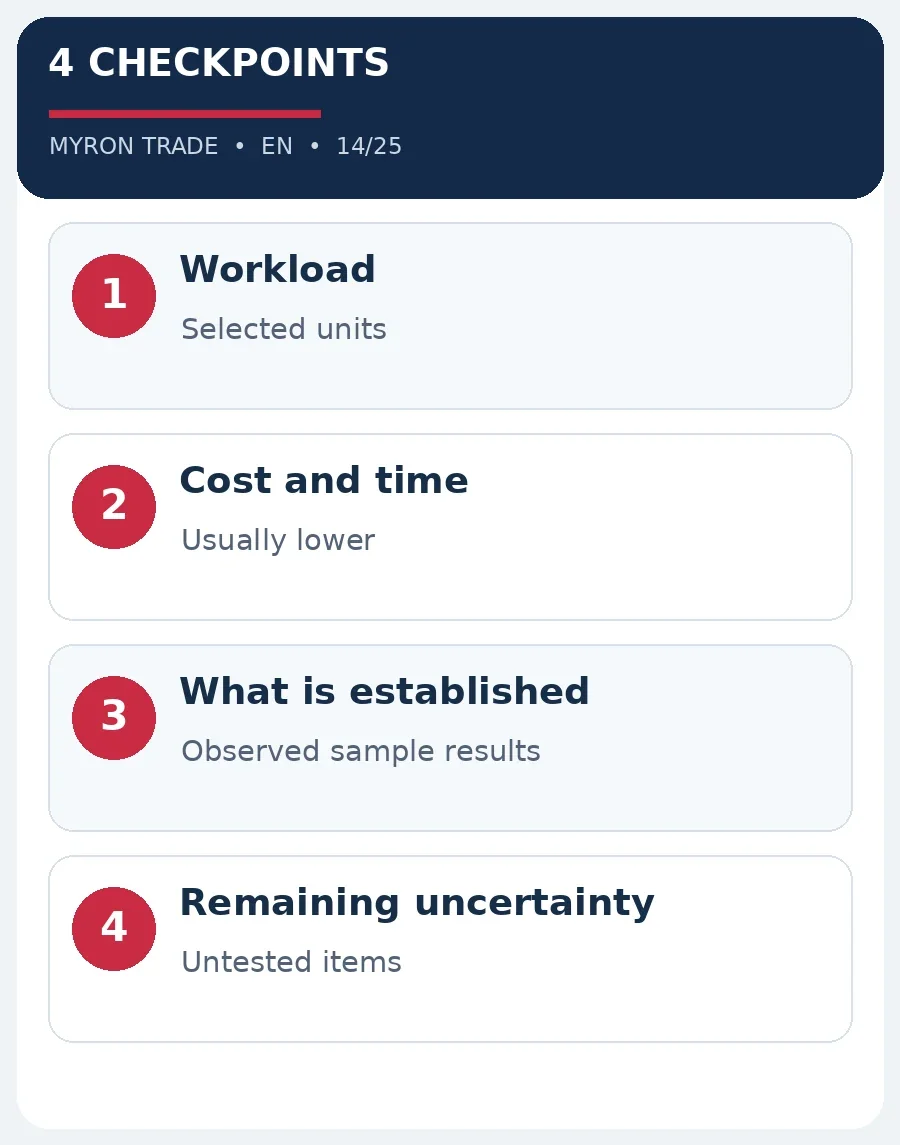
| Workload | Selected units | All units under the test plan |
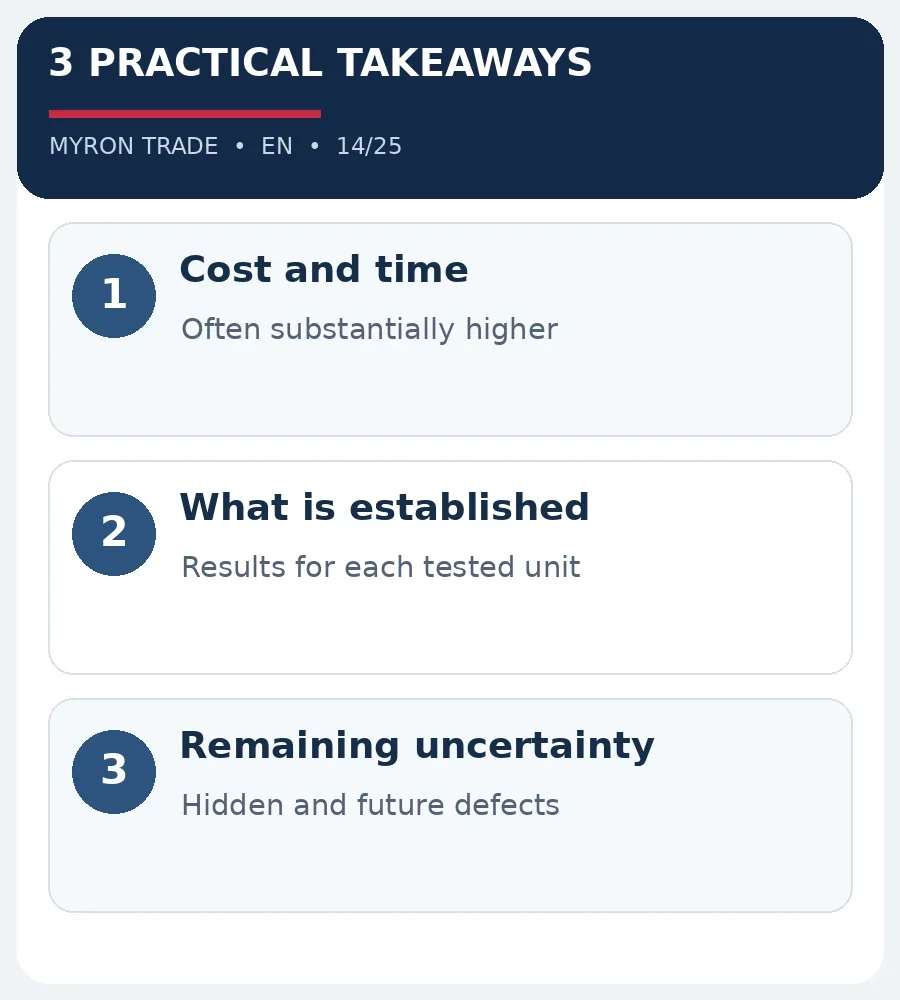
| Cost and time | Usually lower | Often substantially higher |
| What is established | Observed sample results | Results for each tested unit |
| Remaining uncertainty | Untested items | Hidden and future defects |
What an inspection brief should include
Specify the product, quantity, sampling plan, tests, safety conditions, defect criteria, reporting format and steps when the observed failure rate is unacceptable. Identify who can approve additional work and how that work will be charged. The inspector provides evidence; the commercial decision remains with the buyer.
MYRON TRADE arranges factory and warehouse quality inspections. For an unfamiliar supplier, a separate manufacturer verification can complement the product test. One checks the business; the other checks a specific order.
MYRON TRADE services on this topic

Need help with this topic?
Describe the task in your own words — even if you are not sure which service you need. A manager will clarify the details and suggest how to proceed and what it will cost.
What happens next
- A manager clarifies the detailsin the channel you choose
- We propose a work plan and a quotewith an estimate of cost and timing
- We agree the terms and startcontract with our company in Shanghai