Quality control during production in China: when it matters
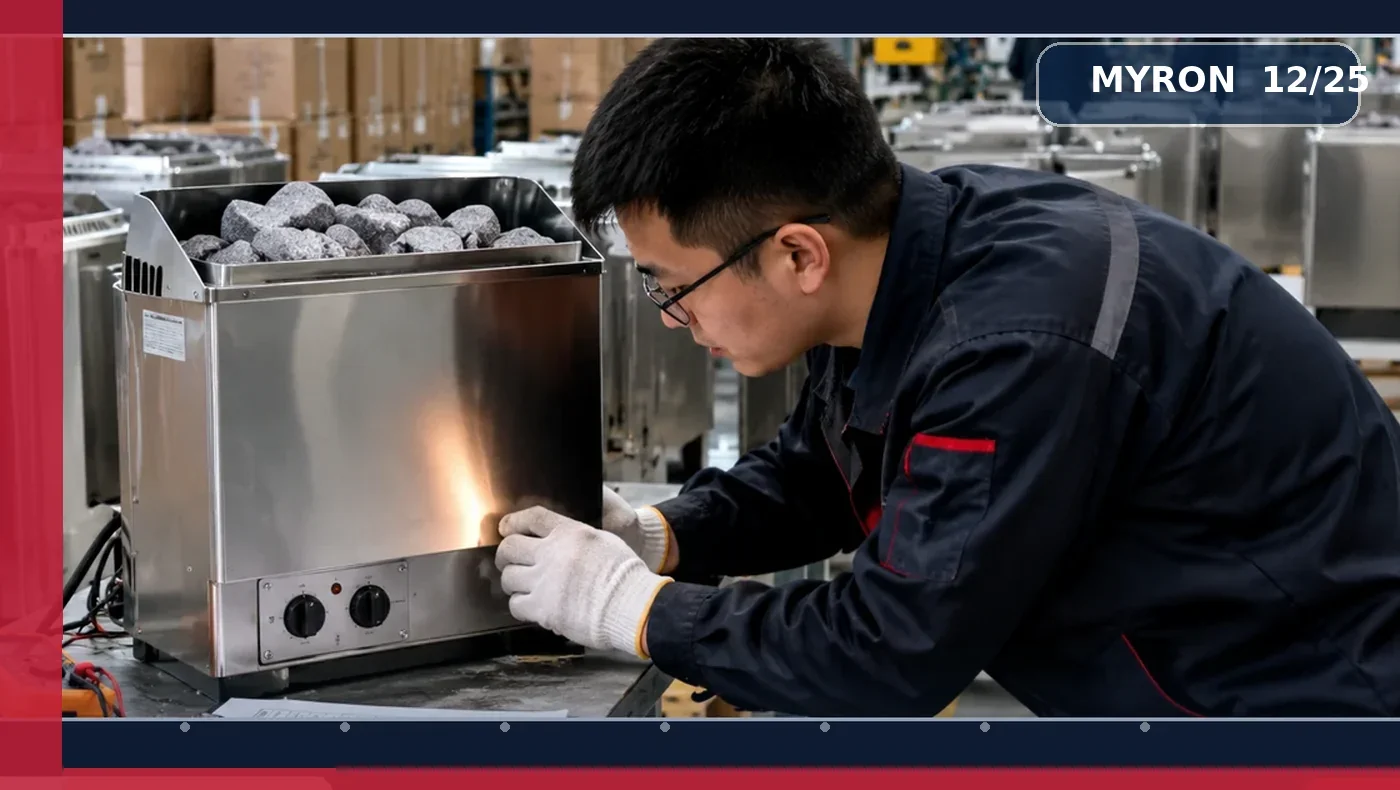
A Chinese factory announces that a batch is finished and ready for inspection. Everything is already boxed.
A Chinese factory announces that a batch is finished and ready for inspection. Everything is already boxed. If a serious fault now appears, opening the shipment, correcting units and repacking can disrupt the delivery plan. For technical products, quality control is often more useful when it starts during manufacturing, while some problems are still easier to correct.
Three inspections with different objectives
An in-process inspection looks at materials, early units and manufacturing operations before the order is completed. A final inspection checks finished goods, count, packing and agreed tests. Container-loading supervision focuses on which packages actually leave and how they are placed for transport. One should not be sold as a substitute for all three.
MYRON TRADE's procurement notes say the team may visit a factory early, rather than waiting for the last piece to be produced. The company can then arrange a final check and supervise loading within the agreed scope. This is especially useful for overseas buyers who cannot return to the factory every week.
What the sauna-heater project teaches
In a documented project, a buyer ordered about 350 electric sauna heaters and initially requested 50 checks. Four of the first ten tested units had problems, including a dangerous wiring failure in one case. The customer expanded the inspection to the entire batch. Three inspectors tested the units; the factory worked on corrections for approximately 10–14 days, followed by another inspection.
That case is explained in a separate article, but it illustrates a broader principle: agree on checkpoints and escalation rules before the goods are finished. Earlier tests might sometimes reduce the cost of correcting a repeated manufacturing problem. This does not prove that all faults in that particular order could have been prevented.
Useful checkpoints for a custom order
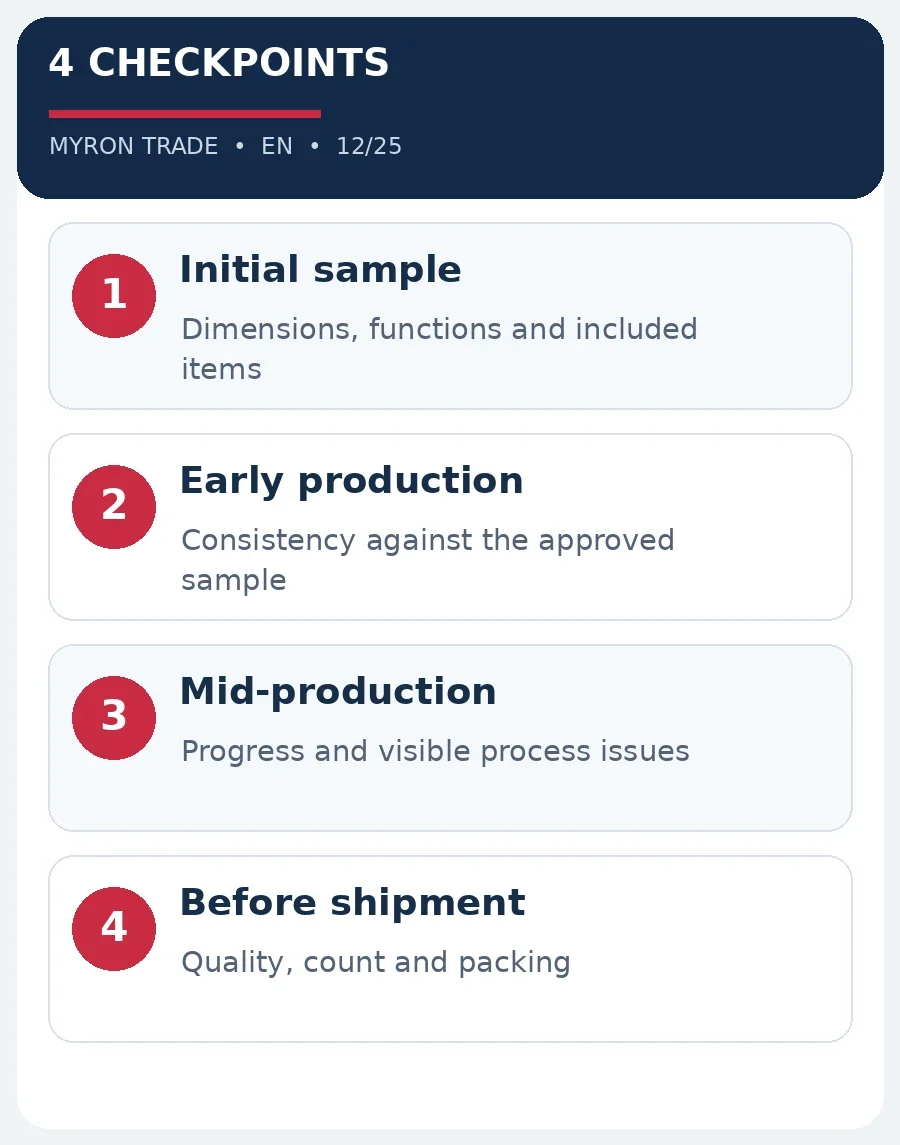
| Stage | What to inspect | Useful evidence |
|---|---|---|
| Initial sample | Dimensions, functions and included items | Photos and measurements |
| Early production | Consistency against the approved sample | Test notes |
| Mid-production | Progress and visible process issues | Status with deviations |
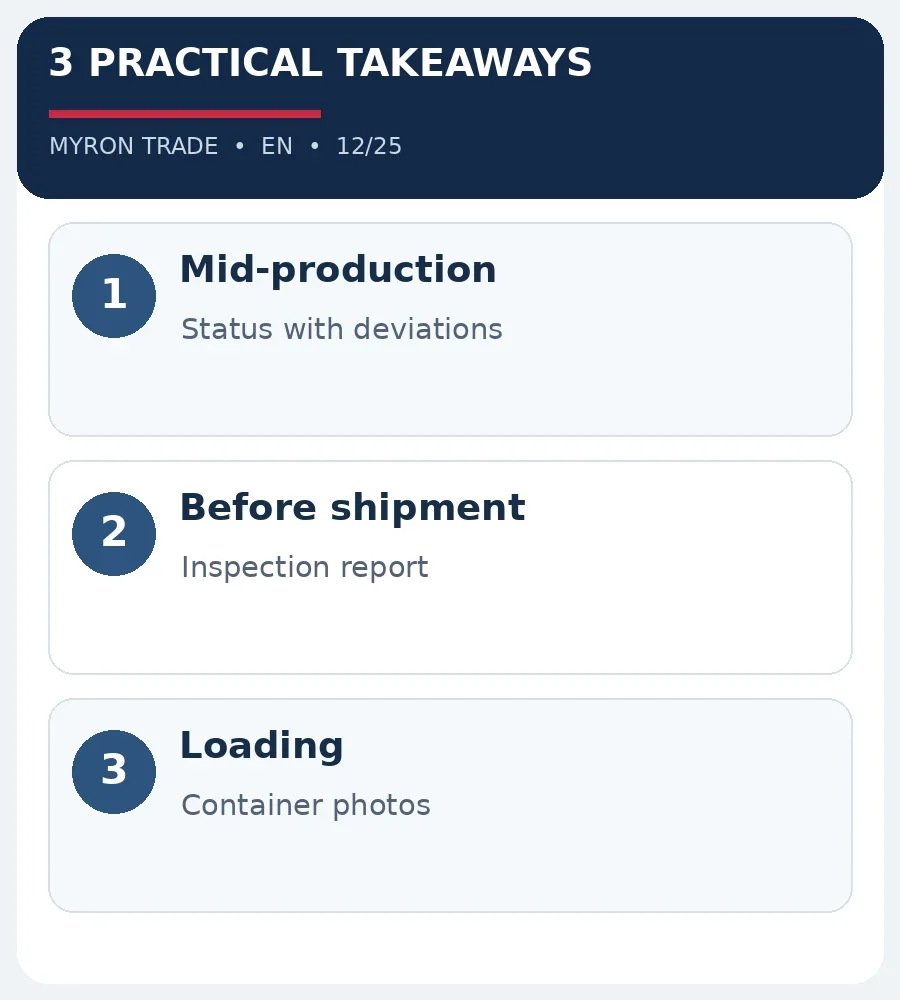
| Before shipment | Quality, count and packing | Inspection report |
| Loading | Packaging and secure placement | Container photos |
Who decides when a fault is found?
The inspector documents what can be established, with clear photos, videos and test conditions. The buyer decides whether to request rework, expand the sample, renegotiate or postpone dispatch. Inspectors should not approve a material substitution or change technical requirements without authorisation. The decision path is best written into the procurement agreement.
MYRON TRADE provides quality inspections in China separately or as part of procurement management. A specification, approved sample and list of critical defects make the inspection more meaningful than an undefined request to “check everything”.
MYRON TRADE services on this topic
Need help with this topic?
Describe the task in your own words — even if you are not sure which service you need. A manager will clarify the details and suggest how to proceed and what it will cost.
What happens next
- A manager clarifies the detailsin the channel you choose
- We propose a work plan and a quotewith an estimate of cost and timing
- We agree the terms and startcontract with our company in Shanghai