
Foreign-owned company or joint venture in China: how to decide
An entrepreneur planning to operate in China may hear two contradictory statements: “always own the company yourself” and “you must have a Chinese…
An entrepreneur planning to operate in China may hear two contradictory statements: “always own the company yourself” and “you must have a Chinese shareholder”. Neither is a reliable rule for every industry. Ownership structure should follow the proposed activity, applicable investment rules and governance arrangements, not a universal sales pitch.
Three approaches discussed in the company's practice
MYRON TRADE's notes distinguish businesses with Chinese owners, jointly held enterprises and wholly foreign-owned structures. The relevant options must be assessed against the business sector, foreign investment restrictions, location, permits and intended operations. Some activities allow foreign ownership subject to conditions; others need specialist review or are restricted. Current regulations should be checked for each project.
A wholly foreign-owned enterprise can give its shareholders control under its constitutional arrangements but still brings accounting, taxation, banking and operational duties. A joint venture may offer local resources or respond to sector-specific requirements, yet introduces governance questions: who approves payments, selects directors, owns intellectual property and can exit the company?
Define the operating model first
Before registration, MYRON TRADE asks what the business will sell, where it will buy goods, who will pay it and which activities will take place on Chinese territory. A trading enterprise, industrial project and conference organiser may need very different permissions and documentation. A business licence is not evidence that any activity is allowed without further approvals.
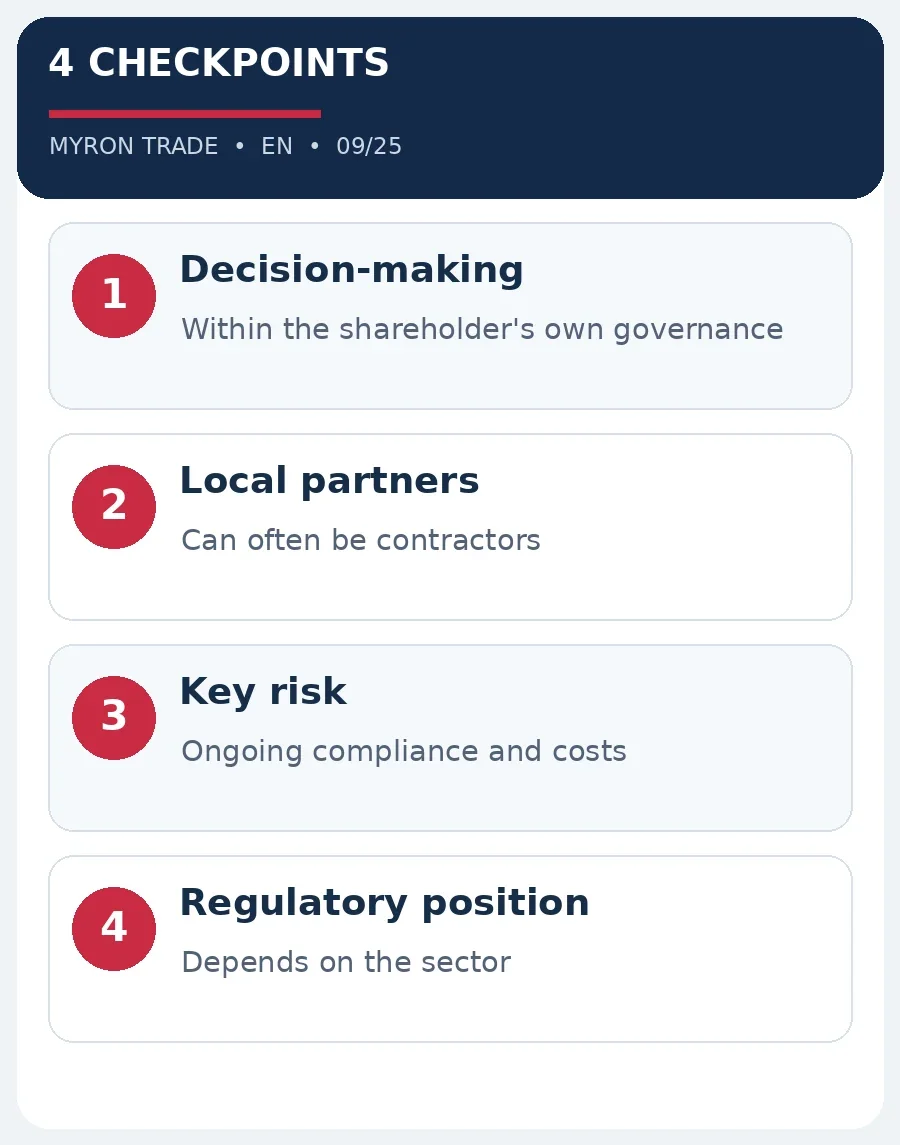
| Issue | Foreign-owned structure | Joint structure |
|---|---|---|
| Decision-making | Within the shareholder's own governance | Shared powers must be agreed |
| Local partners | Can often be contractors | Participate as owners |
| Key risk | Ongoing compliance and costs | Additional shareholder disputes |
| Regulatory position | Depends on the sector | Also depends on the sector |
Put governance questions on paper
Discuss who the actual owners and directors will be, who controls bank instructions, how profit may be distributed, how sensitive information is protected and what happens when partners disagree. Where regulated products or licensed activities are involved, a qualified Chinese lawyer should review the possible structures before incorporation documents are finalised.
The company owner's notes contain an important commercial observation: sometimes the better advice is not to form a Chinese company yet. For occasional sourcing or factory visits, a local representative or purchasing service can be more economical than a new entity with ongoing administrative obligations.
When incorporation may not be the first step
For occasional purchases or short supplier visits, a local representative may achieve the intended result without the recurring administration of a separate company. A business that needs regular trading operations, employees or specific licences is different. Start with a realistic list of transactions, costs and permissions before selecting a corporate structure.
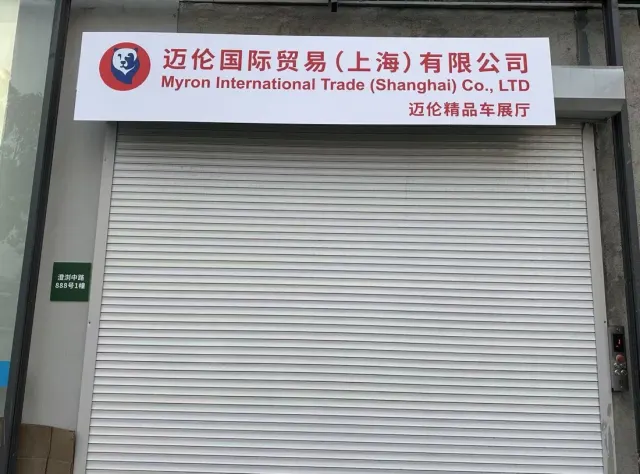
MYRON TRADE supports company registration in China and can discuss a China-based representative as an alternative. Decisions should be based on current professional legal advice, not promises of unconditional incorporation or bank approval.


Need help with this topic?
Describe the task in your own words — even if you are not sure which service you need. A manager will clarify the details and suggest how to proceed and what it will cost.
What happens next
- A manager clarifies the detailsin the channel you choose
- We propose a work plan and a quotewith an estimate of cost and timing
- We agree the terms and startcontract with our company in Shanghai