
Three Chinese Factories, Three Quotes: How to Compare Suppliers Fairly
<p class="article-lead">Three Chinese manufacturers have responded to your RFQ. One offers the lowest unit price, another promises faster production, and the third says its quality is superior. Those offers are not comparable until the material, specifications, tooling, packaging, Incoterms and testing obligations are made equivalent. Here is a practical way to see what you are really buying.</p>
Compare the same requirement, not three different emails
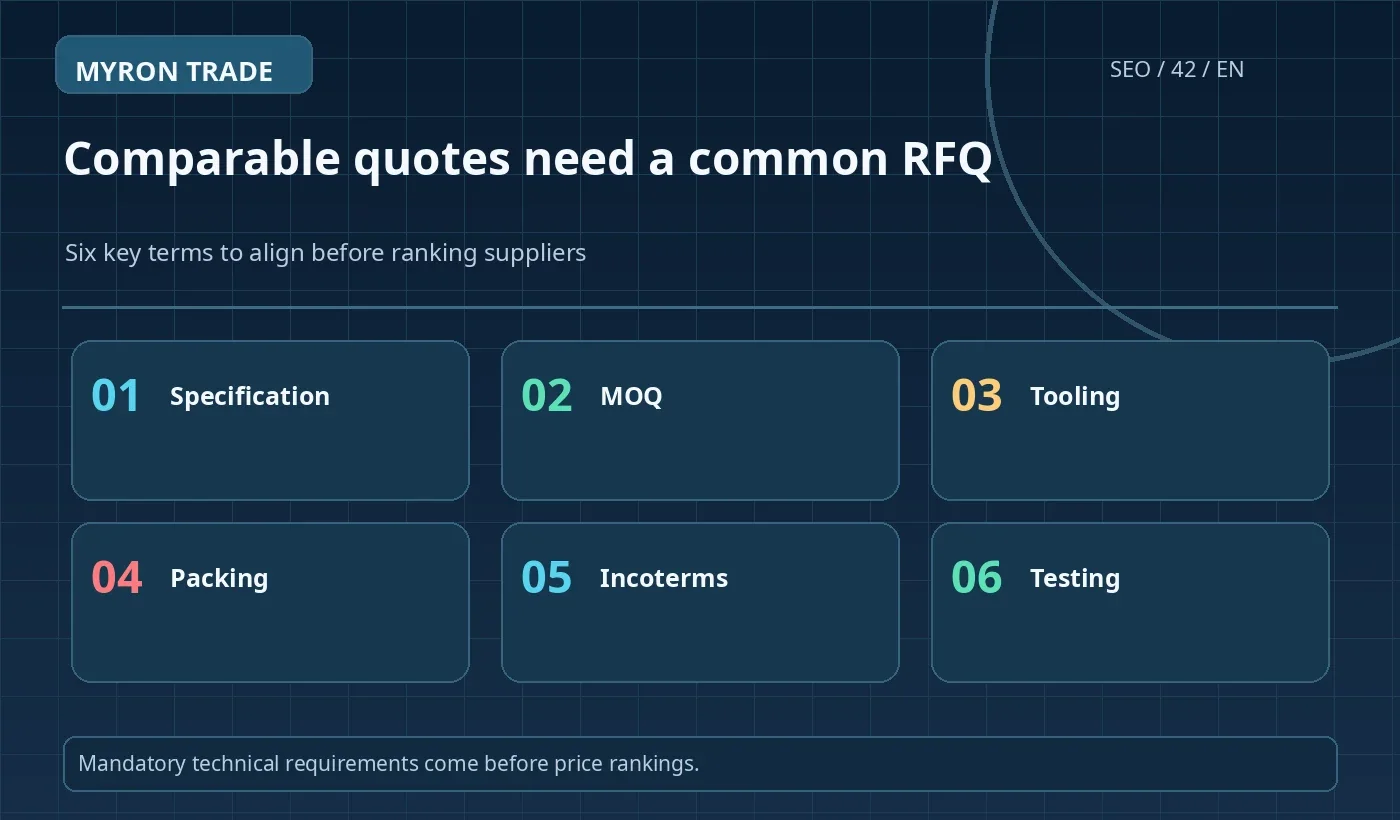
MYRON TRADE begins manufacturer searches by clarifying drawings, technical parameters, quantities, applicable standards, budget and the product’s intended use. Its China-based purchasing team combines a long-established supplier database, exhibition contacts, industry relationships and research in Chinese professional channels. Depending on the project, 10–15 candidate suppliers may be screened before a short list is prepared. That work can expose a trader presenting itself as a factory, an integrator depending on subcontractors or a factory able to manufacture only part of the requested line.
The first principle is simple: send the same RFQ revision to every supplier. Otherwise a price difference may reflect a different material or missing operation rather than a better offer.
Eight commercial conditions to align
| Item to compare | Ask each supplier for | Why it matters |
|---|---|---|
| Technical specification | Drawing revision, material, tolerances, exact model | Similar names may conceal different products |
| MOQ and volume tiers | Minimum quantity and prices at 500/1,000/3,000 | Low unit prices may require larger orders |
| Tooling and samples | Mould price, ownership and lead time | One-time costs can reverse the price ranking |
| Packaging | Unit, export and pallet packing, labels | Affects costs and damage risk |
| Incoterms and named place | EXW or FOB with a precise location | EXW and FOB prices do not include the same responsibilities |
| Manufacturing lead time | Start trigger and milestones | “30 days” without a start definition is vague |
| Quality assurance | Test procedure, inspection access and remedies | “100% good quality” is not a test result |
| Payment and claims | Deposit, balance, warranty and complaints | A cheaper offer can shift more risk to the buyer |
Worked example: a cheaper unit, a more expensive order
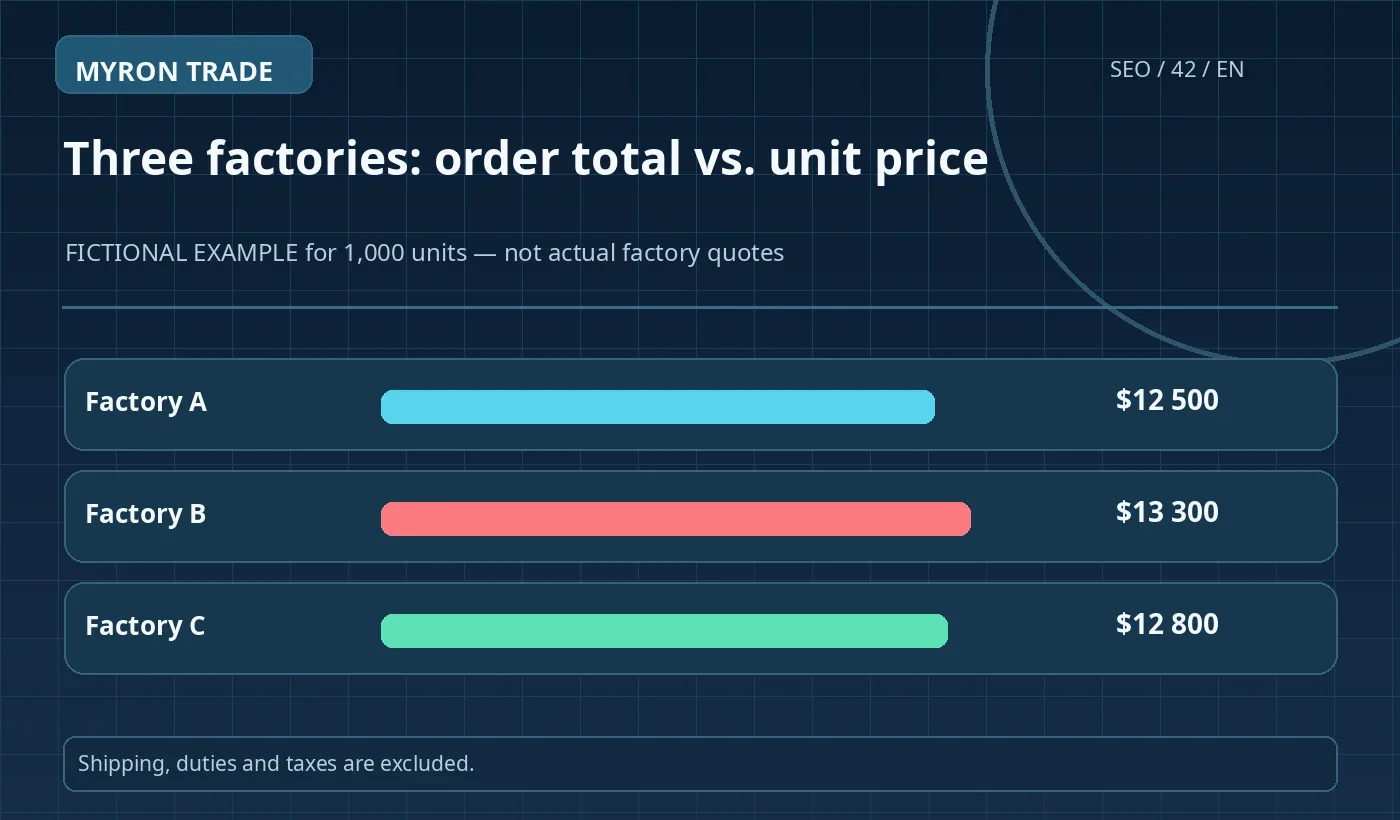
The numbers below are fictional teaching figures, not supplier quotations obtained by MYRON TRADE and not current China-market prices. Assume 1,000 technically identical kits. Shipping, import charges and taxes are excluded from every line; these must later be added consistently.
| Hypothetical supplier | Unit price | Packing per unit | One-time tooling | Total for 1,000 |
|---|---|---|---|---|
| Factory A | $12.00 | $0.50 | $0 | $12,500 |
| Factory B | $11.00 | $0.80 | $1,500 | $13,300 |
| Factory C | $12.80 | Included | $0 | $12,800 |
The formula is (unit price + packing) × quantity + one-time tooling. In this limited example, Factory B has the cheapest unit, yet its total is the highest. If the customer owns the mould and can use it for later orders, the tooling investment should also be modelled separately across future volumes. Inadequate packaging can create damage costs which do not appear in the initial offer at all.
Check technical feasibility before ranking prices
A ranking score is pointless if a critical specification has failed. Power, material grade, performance, compliance and system compatibility are go/no-go conditions, not just weighted criteria that a cheap offer can offset.
| Criterion | Decision state | Evidence to request |
|---|---|---|
| Mandatory specification | Pass / fail | Approved, signed drawings and specifications |
| Similar commissioned projects | Verified / unverified | References or a visit to a working installation |
| Factory's own production | Manufacturer / integrator / trader | Site review and responsibility map |
| Delivery milestones | Documented / vague | Dated schedule and inspection checkpoints |
| Quality and acceptance | Test method agreed / missing | Protocol and correction procedure |
| Commercial comparability | Same basis / not comparable | Currency, named Incoterm, options and exclusions |
A real MYRON TRADE example: five suppliers and a working plant
A client in Turkmenistan needed a complex industrial production line. The initial concept drawing was not sufficient for accurate procurement. MYRON TRADE helped involve engineering specialists, who developed a more practical configuration. The team then negotiated with five component manufacturers, comparing implementation capability alongside quoted terms. One candidate had already supplied a comparable operating line in Kazakhstan. MYRON TRADE arranged for the customer to see that installation, after which a supplier was selected.
It would be incorrect to describe this as “the lowest bidder won”. The decision relied on technical suitability and verifiable project experience. The work later involved representation in China, manufacturing coordination, test assembly, checks and shipment preparation. No independently verified percentage saving is available, so this article does not invent one.
Turn three quotes into an actionable shortlist
- Issue a common RFQ and require a response against each mandatory characteristic.
- Identify which stages each supplier actually performs and which are subcontracted.
- Put omissions, exceptions and unanswered questions into the comparison table.
- Shortlist one or two candidates for a factory visit, technical discussion and company checks.
- Before payment, agree the specification, schedule, acceptance method and correct legal contract party.
MYRON TRADE can source manufacturers, compare offers, arrange negotiation, verify a factory in China and manage turnkey procurement. Its internal guidance for full procurement management is roughly 5–10% of goods value, sometimes higher for complex projects; quote comparison alone is priced according to scope.
Discuss your China sourcing task with MYRON TRADESend the product details, factory location and target date. We will confirm the scope and provide a tailored quotation.
Message MYRON TRADE on WhatsApp

Read also
How to Get Chinese Factory Quotations Without Travelling to China: RFQ Guide Real projects
Related service: Supplier search
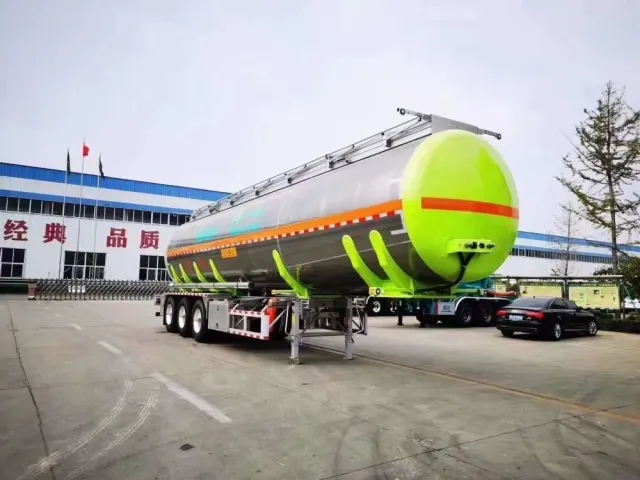
How to find a factory in China for a non-standard production line
Related service: Supplier search

Finding a manufacturer in China: from a product idea to a real factory
Related service: Supplier search
Need help with this topic?
Describe the task in your own words — even if you are not sure which service you need. A manager will clarify the details and suggest how to proceed and what it will cost.
What happens next
- A manager clarifies the detailsin the channel you choose
- We propose a work plan and a quotewith an estimate of cost and timing
- We agree the terms and startcontract with our company in Shanghai