
Buying a tyre-recycling line in China: control the project, not just the quote
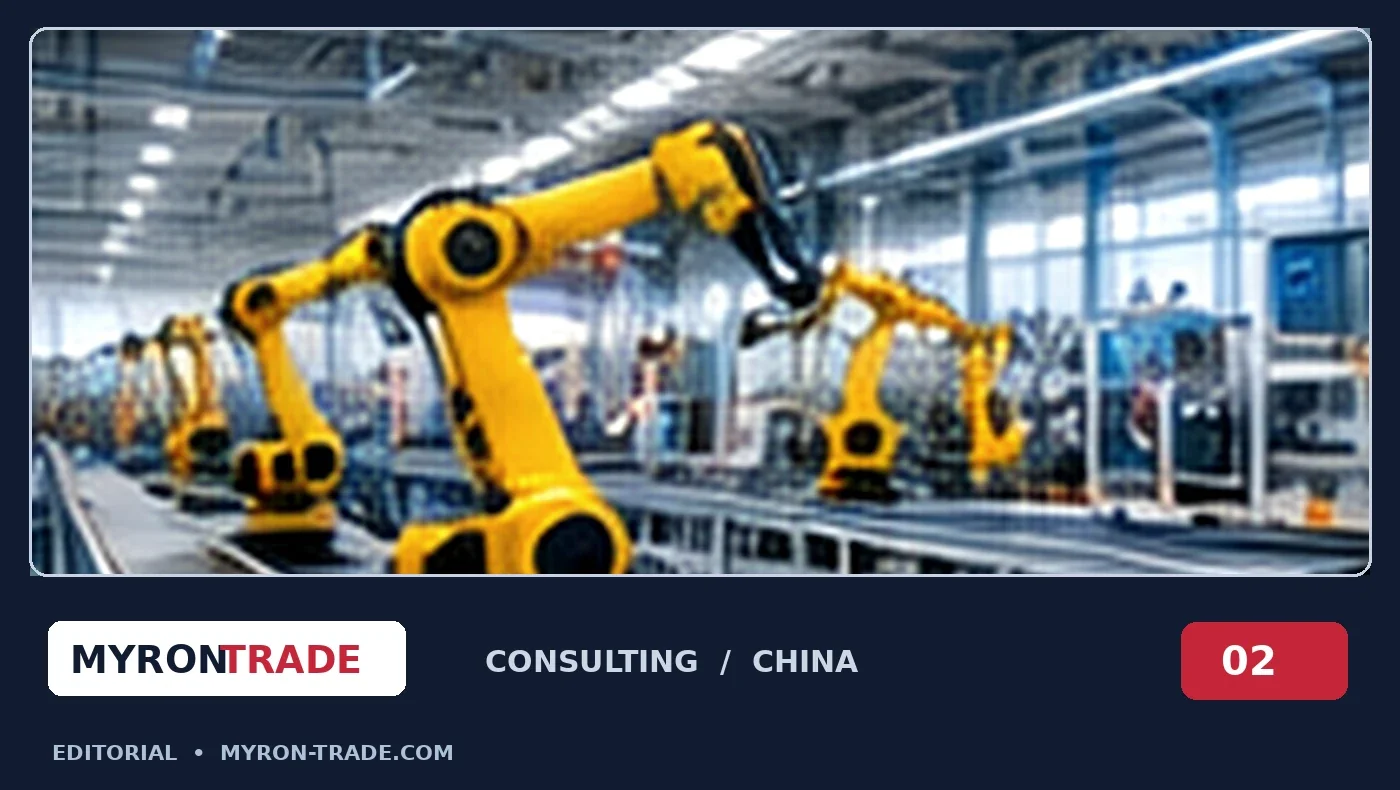
An industrial equipment project shows why the purchase needs management from specification to shipment.
Buying an industrial line from a Chinese manufacturer is not simply a matter of comparing quotations. One supplier's offer may include only the main machines, while another includes conveyors, controls or support that will be essential once the equipment reaches your site. The cheapest figure on page one can turn into an expensive project when those gaps emerge.
MYRON TRADE has helped procure equipment for cutting, processing and reusing vehicle tyres in a project worth hundreds of thousands of dollars. Our involvement covered manufacturer sourcing, production follow-up, inspection, packing and shipping arrangements. The useful lesson from that work is straightforward: manage the entire purchasing process, not just the order confirmation.
Define the line before comparing suppliers
Start with the intended output, the type of tyres to be processed and the required capacity. Then identify each major machine, connecting system and control element. A specification should also address power supply, documentation, spare parts, testing and the work expected from the manufacturer after delivery.
Two proposals with different technical scopes cannot be ranked fairly by price. Ask each factory to explain what is included, what is excluded and which parts will be supplied by subcontractors. When different manufacturers build the components, somebody must take responsibility for making those components work together.
That integration question is especially important for industrial projects. A set of individually functioning machines is not necessarily a functioning production line.
What procurement support looks like in practice
We first discuss the customer's requirements and identify potential manufacturers. After comparing the proposals, the project needs a clear contract, technical attachments, manufacturing schedule and agreed inspection points. Otherwise the buyer may transfer a deposit and hear very little until the factory announces that the equipment is ready.
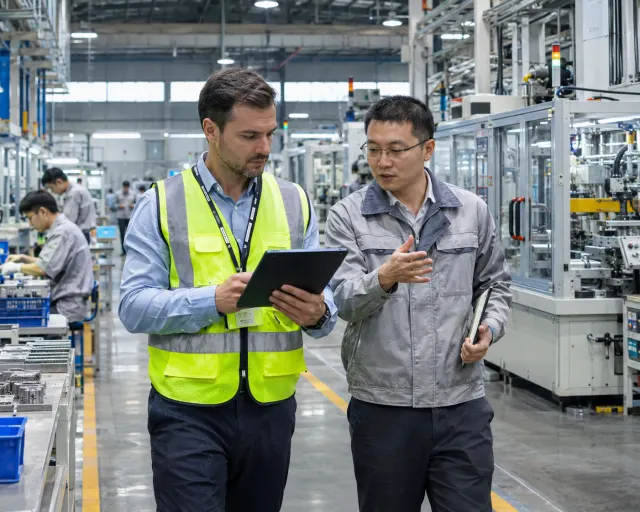
For comprehensive procurement assignments, MYRON TRADE visits the production site at an early stage, not only once everything has been packed. An early visit provides a chance to question dimensions, components or execution while changes are still possible. A separate final inspection is then arranged before shipment.
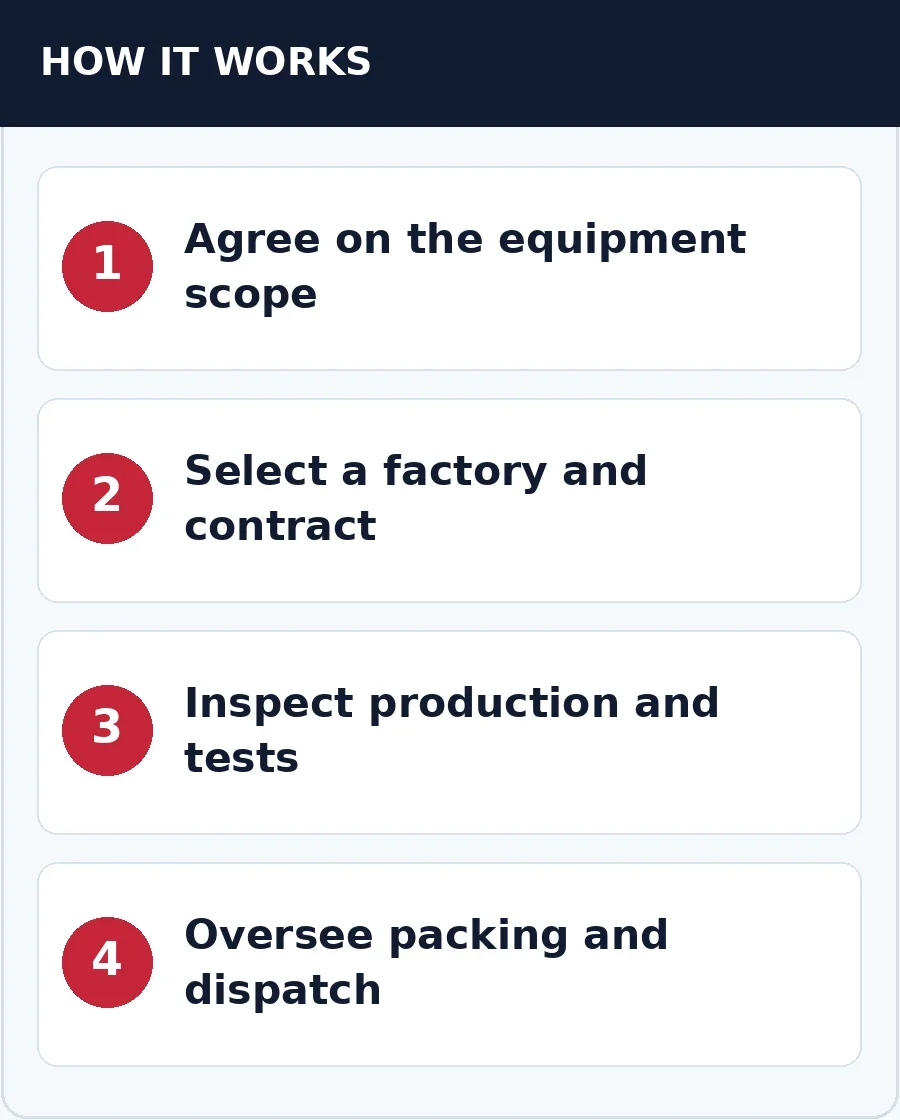
The number of visits, technical tests and reports depends on the agreement. The aim is not to station an engineer beside every machine indefinitely. It is to make the important stages visible and ensure that the buyer knows what evidence supports a claim that a stage has been completed.
Five questions to ask before paying a deposit
| Ask the manufacturer | Request in writing | Why it matters |
|---|---|---|
| What does the quoted line include? | Full equipment list and exclusions | Avoid unexpected purchases later |
| Who builds the components? | Subcontracting and integration responsibilities | Know who owns compatibility problems |
| Have you delivered similar lines? | Relevant completed projects | A brochure is not proof of operation |
| What can be tested before dispatch? | Testing plan and acceptance criteria | Define what “ready” means |
| How will everything be packed? | Packing and container-loading plan | Reduce avoidable transport damage |
Also discuss installation, commissioning, training and after-sales support. These services should never be assumed to be part of a factory quotation simply because the equipment is expensive.
Why container loading deserves attention
Production may be finished, but the shipment can still go wrong. Heavy components need appropriate securing, fragile items need protection, and every crate must be identifiable at destination. Our team checks packing and loading as part of the procurement process where agreed.
Efficient use of container space matters, but safety takes priority. Saving a little on freight by packing equipment poorly may create much greater costs during unloading or commissioning. Dimensions, centre of gravity and securing requirements belong in the loading plan.
One project, several responsible parties
The factory makes the equipment. Inspectors check what their assignment covers. Logistics partners manage transport stages. The buyer approves commercial decisions. Without coordination, responsibilities can fall between these participants.
MYRON TRADE offers turnkey procurement support in China, with product quality inspections and cargo consolidation available where required. The precise responsibilities should be written into the contract rather than inferred from a service name.
Put real milestones behind the promised delivery date
“Production will take three months” is less useful than it sounds if nobody has agreed when the clock starts. Is it after the deposit, final drawings or approval of components? For a multi-machine line, these dates may differ substantially. Separate the schedule into documentation, manufacture, assembly, testing and readiness for loading.
When a stage slips, ask for a specific explanation: what is unfinished, whose decision is required and what happens to subsequent activities? Constant meetings are not necessary. A concise progress report, backed by photographs and a list of open issues, can give the buyer meaningful control while the equipment is still in China.
What the buyer should have throughout the project
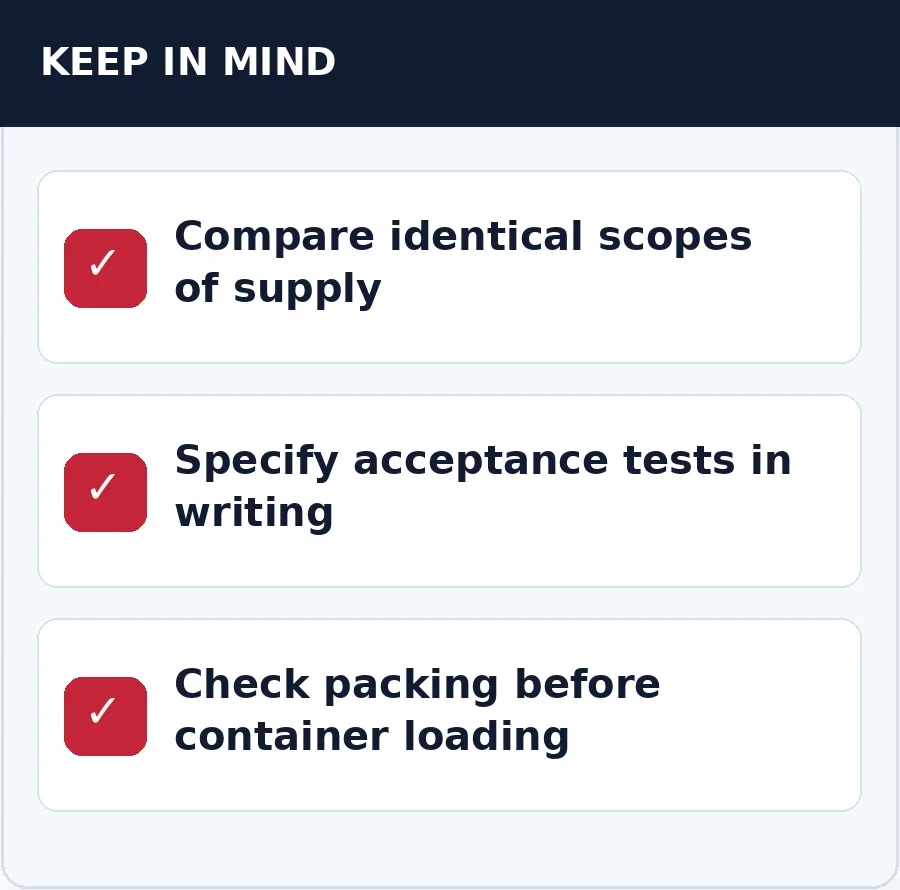
Keep one agreed specification, a stage-by-stage schedule, records of inspections, a named contact and a procedure for handling deviations. When a missing component is discovered, the answer should come from the documented scope of work, not from conflicting recollections of a phone call.
If you are considering an industrial purchase, send us the intended product, capacity targets and any available drawings. That gives us a meaningful basis for discussing manufacturers, inspection scope and the work needed before shipment.

Need help with this topic?
Describe the task in your own words — even if you are not sure which service you need. A manager will clarify the details and suggest how to proceed and what it will cost.
What happens next
- A manager clarifies the detailsin the channel you choose
- We propose a work plan and a quotewith an estimate of cost and timing
- We agree the terms and startcontract with our company in Shanghai