
Why a light box costs like a heavy one: volumetric weight and express shipping from China
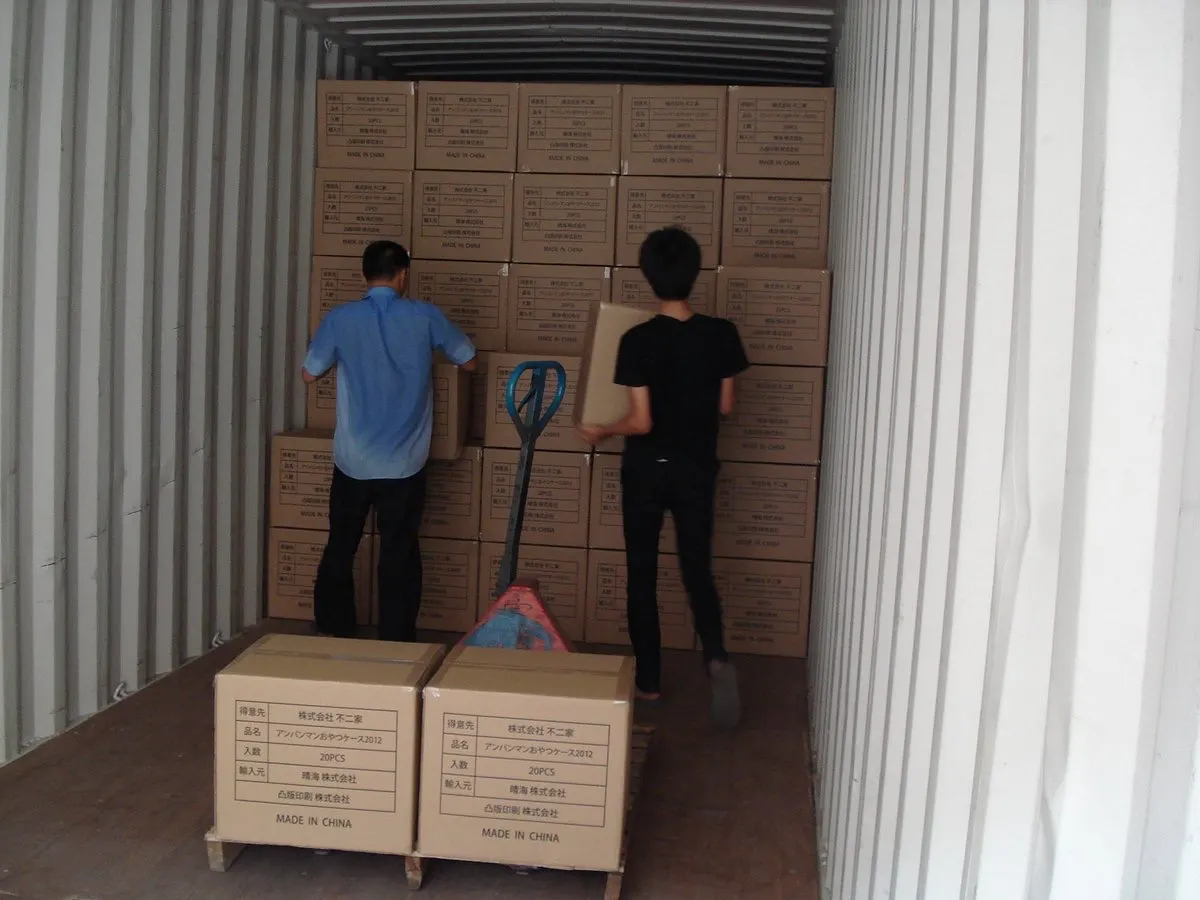
An express carrier charges for the higher of two numbers: what the box weighs on a scale and what it "weighs" by its size. So a big box of floor mats can cost more to ship than a small box of brake discs. Below, a simple example shows how the carrier picks the weight, how to cut the bill with better packing, what to prepare for an exact quote, and when a consolidated shipment beats express.
Why a light box can cost more than a heavy one
Say you ordered two sets from China for your car. The first box holds floor mats and plastic interior trim. The box is 60×40×30 cm and weighs 5 kg on the scale. The second holds brake discs. It is 30×20×15 cm and weighs 12 kg.
It looks like the second one will cost more, since it is more than twice as heavy. In practice it can go the other way. The carrier looks at the size as well as the scale. The first box has eight times the volume (72 litres against 9). It takes up a lot of room on the plane, even though it weighs almost nothing.
So every box gets two weights. Actual weight is what the scale shows. Volumetric (dimensional) weight comes from the size: it is a notional weight that "pays" for the space the box takes. You pay for the higher of the two. That figure is called the chargeable weight, and the per-kilogram rate is multiplied by it.
How the carrier picks the weight
The formula is simple. Multiply length, width and height of the box in centimetres, then divide by a number the carrier sets. Look up that number in the carrier's terms. It can differ between services and tariffs, so it is best not to quote it from memory.
Back to our boxes. Say the carrier's formula gives 14 kg for the first and about 2 kg for the second. Compare with the scale.
| Box | On the scale | Volumetric weight (assumed) | You pay for |
|---|---|---|---|
| Mats and trim, 60×40×30 cm | 5 kg | 14 kg | 14 kg |
| Brake discs, 30×20×15 cm | 12 kg | 2 kg | 12 kg |
The light box is charged as 14 kg, the heavy one as 12. The numbers are made up for the example, and your invoice will show other ones. The logic is the same. Carriers also round the weight on their own scale, so the final figure differs a little from a home calculation.
Why is it done this way? A plane and a sorting hub fill up by volume as well as by mass. Air in a box takes space that other cargo could use, and the carrier charges for that space.
How to cut the bill with packing
You cannot change what the goods weigh, but you can change the volume. The box is measured with its packaging, at the widest points, and a bulging carton is measured at the bulge. Here is what helps.
- Take out the air. Sellers on Taobao and 1688 often drop goods into whatever box is nearest. Cut each side by a few centimetres and the volume falls faster than you expect, because three dimensions are multiplied.
- Split off the long item. It sets the size of the whole box, and everything else pays at volume along with it. Work out both ways: one big box or two smaller ones.
- Do not trust the product page. It usually gives the weight and size of the item itself, without packaging. Ask the seller for a photo of the packed box on a scale, next to a tape measure.
- Check the limits early. Express has maximum dimensions and weight per piece, and large or awkward pieces can carry a surcharge. Look at the figures in the carrier's terms before you order.
There is a limit to this. Do not shrink the box at the cost of protection. Glass, sensors and plastic trim with thin clips need padding. A damaged part costs more than a few extra kilograms on the invoice. Remove the emptiness, keep the protection.
While the box is still open, check the goods too. We wrote about how to do it in the article on quality control before shipment.
What to prepare for an exact quote
The rate depends on the destination, weight, size, type of cargo and the way the shipment is cleared. A manager can name an exact sum instead of a range if you give the details from this list.
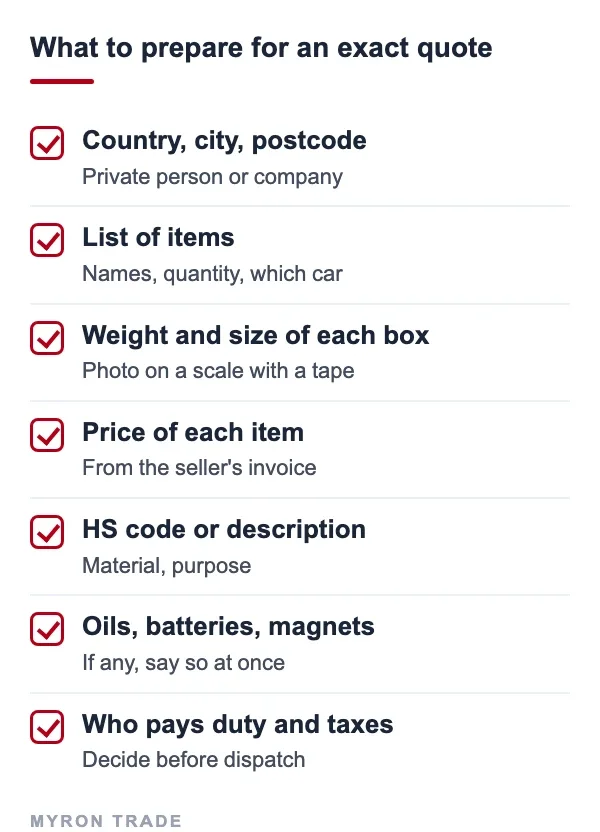
The HS code is the number of the product in the customs tariff, and it decides the duty. If you do not know it, the material, purpose and description are enough, because the code is worked out from them.
The total has two separate parts. Freight is calculated from weight and size. Duty and taxes in your country depend on the value of the goods, the HS code and the country itself. Ask in advance whether they are in the quote or you pay them on delivery.
A word on paperwork. The commercial invoice is the bill for the goods, and customs reads it. The word "parts" tells nobody anything. Write what the part is, what it is made of and which car it is for. The description on the invoice, on the packing list (what is in each box) and the real contents must match. Do not understate the value or call the shipment a gift: mismatches can end in delays and extra charges. The rules depend on the country, so check the details with a customs broker where you live.
Can you ship oil or a battery
For an electric car owner, gearbox oil, grease or a battery is an ordinary item on the order. For a carrier it is a separate category. Oils, batteries and other regulated goods need a check on whether they may be carried and imported into your country. Express may refuse such cargo, or accept it only with special packing, labelling and documents.
So ask before you pay the seller, not after. The same goes for aerosols, magnets and any unit with a cell inside. The rules depend on the destination and change, so confirm them with the carrier and a customs adviser.
Express or a consolidated shipment
Express is good when you need something fast and in small amounts. If you buy a lot, or the goods are bulky, price a consolidated shipment as well.
| Express (FedEx) | Consolidated shipment | |
|---|---|---|
| When it fits | A part is urgent, the car is off the road | Stock for later, no rush |
| How much | One box or a few small ones | Many purchases, regular restocking |
| How many sellers | One or two | Several: goods go to a warehouse, get checked and packed together |
| Big and light | You pay for volume | We work out the saving for your batch |
| Paperwork | A set for each shipment | One set for the batch |
We use one rule of thumb: for regular international shipments, a talk about extra discounts starts at roughly 25 kg. That is a reason to talk, not a tariff condition. If you buy a little at a time from different sellers, combining orders at a warehouse helps reach that weight in one dispatch. It adds time for collection, and that is the price of the approach.
What we take on
MYRON TRADE has partner conditions with FedEx and its own negotiated rates, and part of the benefit can be passed on to the client. We work out the rate from the destination, weight, size, type of cargo and clearance terms. If the goods are bought through our buying service, they are received, checked and packed in China, and weight and size can be measured before dispatch.
You can send the item details through the FedEx shipping from China page, and we will advise on the documents there. Shipments to Russia follow a different scheme, described on the cargo page.

Need help with this topic?
Describe the task in your own words — even if you are not sure which service you need. A manager will clarify the details and suggest how to proceed and what it will cost.
What happens next
- A manager clarifies the detailsin the channel you choose
- We propose a work plan and a quotewith an estimate of cost and timing
- We agree the terms and startcontract with our company in Shanghai