Medical Tourism to China: Diagnostics, Treatment and Support in Shanghai
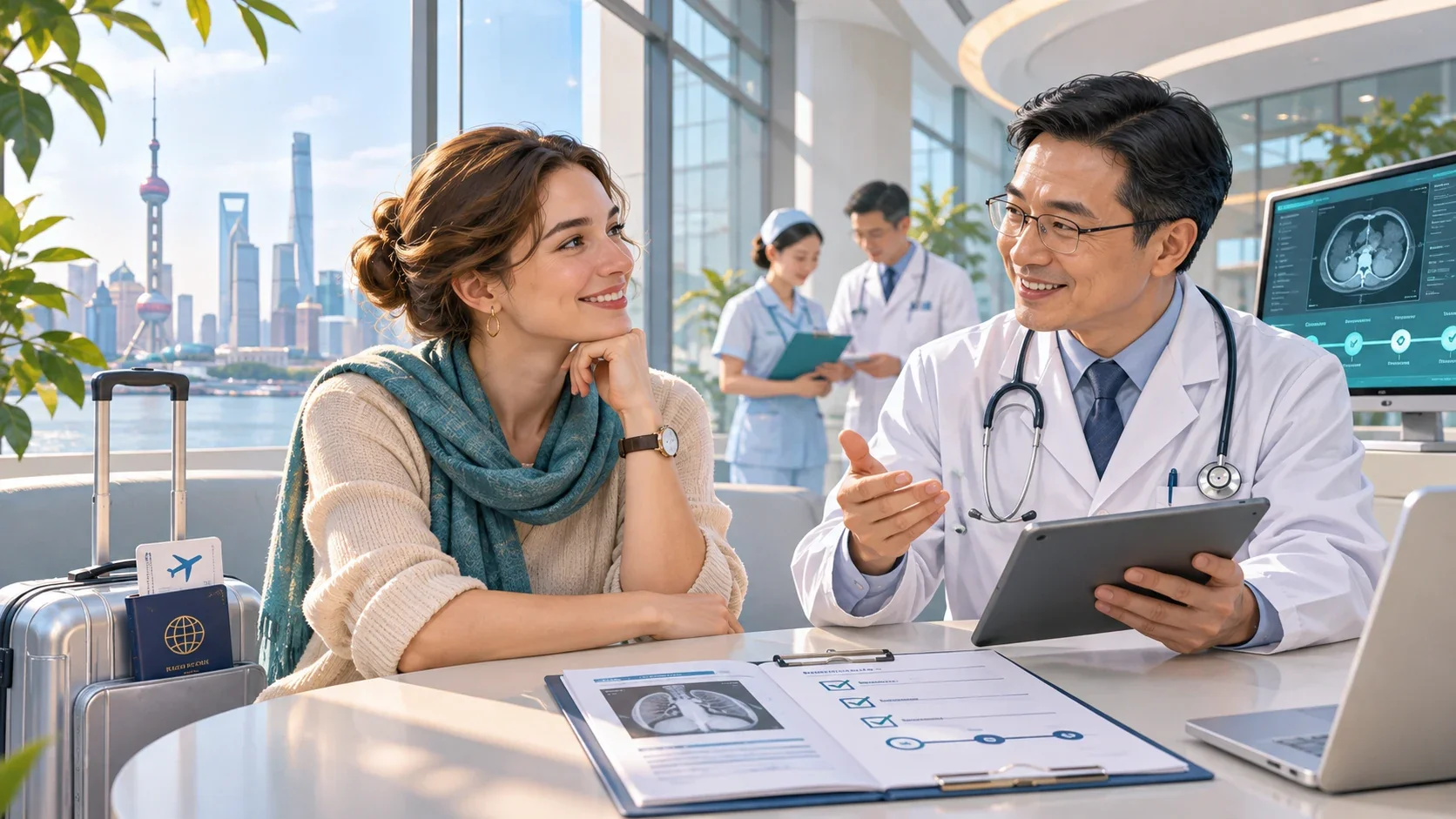
Medical tourism to China is not just about one appointment or one surgery. In practice, it is a full journey: choosing the right hospital, arranging doctor access, translating records, coordinating diagnostics, solving transport and accommodation, communicating with medical staff, and helping the patient and family feel oriented in a foreign system. For many international patients, this organizational layer is exactly where the biggest stress begins.
Quick navigation
- What medical tourism to China means
- Why patients choose China
- Real cases
- How the process works
- What MYRON TRADE does
- FAQ
- Back to top
For MYRON TRADE, this direction has already moved from theory into real practice. Since early autumn, when the weather in Shanghai became more comfortable and partner hospitals returned to a more regular rhythm of receiving patients, we started receiving practical requests from abroad for diagnostics, treatment, and hospital support in China. Some came through word of mouth. What patients were looking for was not just “someone to translate at the hospital”, but full coordination from the first message to treatment and recovery.
Important: MYRON TRADE does not diagnose or treat patients. Our role is organizational and communicational. We help connect people with Chinese hospitals and specialists, prepare the trip, support consultations and examinations, and make the process clearer on the ground.
What medical tourism to China means today
Medical tourism can mean very different things. For one patient, it may be comprehensive diagnostics after months of uncertainty in their home country. For another, it may be an oncology route: a second opinion, staging, surgery, and recovery. For someone else, it may be rehabilitation or supportive care, including the possible use of traditional Chinese medicine alongside mainstream treatment.
China attracts attention because it combines major multidisciplinary hospitals, strong specialty departments, international medical services, and a long-established model in which Western medicine and traditional Chinese medicine can coexist within the broader healthcare system. According to official Chinese statistics, the country had about 10.09 million hospital beds in 2025 and 10.58 billion medical visits that year. China also had roughly 12,000 public hospitals, including around 2,800 tertiary public hospitals, which play a central role in managing difficult and complex cases. For patients, those numbers matter not as abstract data, but as indicators of scale, case volume, and institutional experience.
China is also expanding hospital digitalization, international service capacity, and integrative care. In major cities, international or foreigner-friendly departments already operate within the official healthcare landscape. Shanghai and Beijing publicly list medical institutions that provide international medical services, English-language support, and dedicated care routes for expats and overseas visitors.

Why patients choose China for diagnostics and treatment
1. High clinical volume. China’s leading hospitals handle very large numbers of patients. In complex or unusual cases, this accumulated clinical exposure can matter.
2. Strong diagnostics and multidisciplinary care. Serious cases often require a team rather than a single doctor: neurologists, surgeons, oncologists, diagnosticians, and rehabilitation specialists. Chinese hospitals can often organize this inside one route.
3. Modern medical infrastructure. China continues to develop surgical technologies, digital systems, telemedicine, and robotic solutions. For patients, that often translates into a more structured process and access to strong centers.
4. Integration of Western medicine and traditional Chinese medicine. This is one reason some patients consider China not only for surgery or diagnostics, but also for recovery and supportive care. In 2024, traditional Chinese medicine institutions recorded 1.68 billion visits, showing how deeply this system is embedded in formal healthcare.
5. On-the-ground support matters. A strong doctor is only part of the story. International patients also need clear communication, navigation, scheduling, translation, and support through the hospital process.

Real cases from MYRON TRADE practice
The following stories are based on real experience, with personal details intentionally anonymized. They are included not to make dramatic promises, but to show the kinds of situations in which medical support in China can become relevant.
Case 1. Unclear neuromuscular symptoms affecting the legs
One patient came to us from abroad with a problem that had remained difficult to explain through local diagnostics. During long sitting periods — and sometimes after only 15 to 20 minutes of rest — the patient experienced significant numbness in the lower limbs. Walking afterwards became difficult, with the legs feeling heavy and rigid. The person was not simply looking for a hospital, but for a route through the Chinese system.
We helped organize the trip, appointments, communication with Chinese doctors, and on-site support during examinations. After consultations and diagnostics, the Chinese side linked the symptoms to an inflammatory issue affecting major nerve structures in the upper thigh / hip region. The patient was offered a route that combined traditional Chinese medicine and recovery methods: acupuncture, manual and massage techniques, herbal support, and rehabilitative body work. According to the patient, the condition improved significantly. For us, the value of this case is not a miracle narrative, but the fact that a more coherent diagnostic and treatment pathway was built in China after a long period of uncertainty.
Case 2. Oncology route: examinations, surgery, recovery
We have also been approached by patients with oncological diagnoses, including stage-two colorectal cancer and cancers involving other organs. In these cases, the challenge is not only medical. The patient and family also need a hospital, specialist doctors, understandable scheduling, translated medical records, support around surgery, in-hospital navigation, and follow-up during recovery.
We helped establish communication with Chinese hospitals, organize visits, coordinate examinations and consultations, and build the route. In one case, after a full diagnostic work-up, surgery was performed successfully, and the patient is now in recovery. This does not mean China “guarantees success”. It means that for some patients, China can provide a strong and organized care route — especially when someone on the ground helps make that route understandable and manageable.
That is why support matters so much. A strong doctor is only half of the equation. The other half is how quickly and clearly the patient reaches that doctor, how well the examinations are coordinated, who helps explain recommendations, and who removes chaos from the non-medical side of the journey.
How the medical support process works
Every case is different, but the overall logic usually looks like this:
- Initial request. The patient shares the diagnosis or symptoms, available records, and the main goal: diagnostics, second opinion, surgery, rehabilitation, or TCM support.
- Preliminary review. We help understand which city, hospital profile, or direction may fit, what documents should be translated, and which questions should be clarified early.
- Hospital-side communication. We coordinate with the hospital or doctors and help define the format of consultation, testing, hospitalization, or treatment planning.
- Trip preparation. We help with accommodation, transfers, timing, translator support, and practical arrangements.
- Examinations and treatment. We support communication during consultations, diagnostics, hospitalization, surgery planning, and everyday hospital logistics.
- Discharge and recovery. We help with records, recommendations, translation, onward planning, and in some cases recovery coordination.
The value of support becomes especially visible when the patient is physically weak, emotionally overwhelmed, or facing a serious condition. In those moments, it matters that someone else can carry part of the burden: calls, explanations, transport, coordination, and routine questions.

Where China may be especially relevant
There is no universal answer. Suitability depends on diagnosis, disease stage, urgency, budget, and the availability of the right specialist. Still, based on our observations and the requests we receive, interest often focuses on:
- complex or unresolved diagnostic cases;
- oncology consultations, examinations, and surgical routes;
- rehabilitation and recovery support;
- cases in which patients are interested in combining mainstream care with traditional Chinese medicine;
- situations where a patient needs not only a doctor, but full support on the ground in China.
At the same time, we do not promise what should not be promised. In some cases, treatment is better pursued close to home, and China may make more sense only for a second opinion. In other cases, the patient needs urgent intervention and the trip cannot be delayed for logistical planning. A responsible approach starts with a realistic assessment, not with selling a trip at any cost.
What MYRON TRADE does within medical tourism
Our role is organizational and communicational. We can help with:
- understanding the route and identifying a likely direction;
- collecting and translating records for preliminary review;
- communicating with Chinese hospitals and specialists;
- arranging arrival, accommodation, transfers, and timing;
- supporting the patient and family at the hospital;
- providing interpretation and clear communication support;
- coordinating examinations, hospitalization, treatment, and recovery steps;
- solving practical day-to-day issues during the stay in China.
This becomes especially important for families during difficult moments. When surgery or a serious diagnosis is involved, relatives should not have to carry the full load of navigation, paperwork, cashier desks, ward issues, discharge logistics, and language barriers alone.
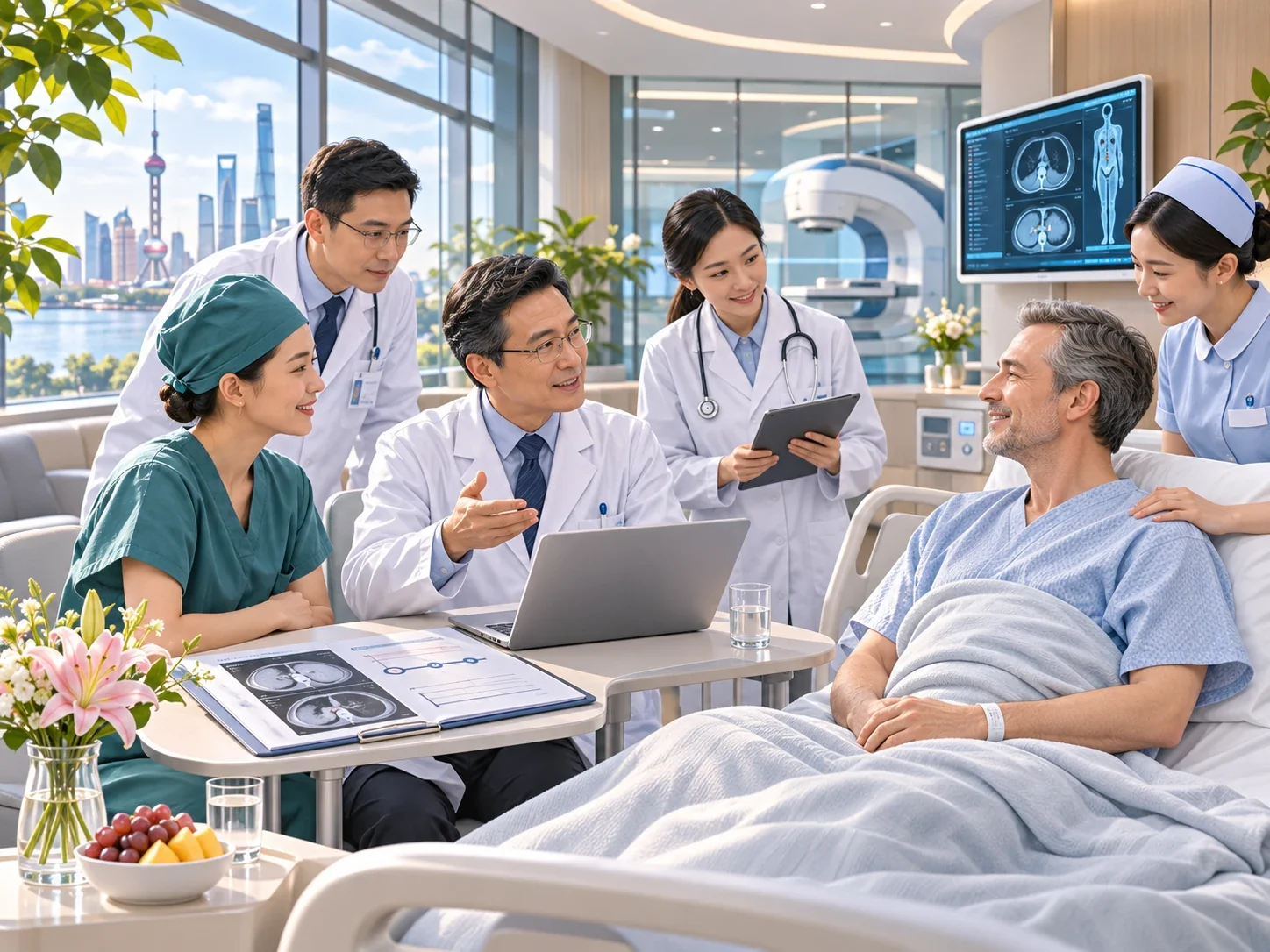
What should be checked before travelling for treatment
- Medical records. Clear imaging, reports, tests, and case history make it much easier to evaluate the route in advance.
- Realistic expectations. No country and no hospital can guarantee a cure simply because treatment happens abroad.
- Language and communication. Even in a strong hospital, international patients usually benefit from a coordinator and translator.
- Financial planning. It is important to understand in advance how deposits, testing, hospitalization, and related costs may work.
- Post-treatment planning. The route should include not only arrival and treatment, but also what happens afterwards.
Traditional Chinese medicine deserves a separate note. It can be a meaningful part of a route, especially in recovery or supportive care. But it should be discussed within a real clinical context rather than as a vague promise of “trying everything”.
FAQ: common questions about medical tourism to China
Can I come to China only for diagnostics, without surgery?
Yes. For some patients, diagnostics and a second opinion are the main purpose of the trip.
Can mainstream treatment and TCM be combined?
In some cases, yes. Integrative care is common in China, but the exact route depends on doctors and clinical indications.
Do you work only in Shanghai?
Shanghai may be the main focus, but routes can also involve other cities in China depending on the hospital profile and the patient’s needs.
Do you provide treatment yourselves?
No. MYRON TRADE is not a medical institution. We organize support, communication, logistics, and coordination with the Chinese healthcare system.
Can a relative travel with the patient?
Yes, and in serious cases this is often reasonable. We can help plan the route with a companion in mind.
Conclusion
Medical tourism to China is not a search for miracles. It is a practical option for people who need access to strong diagnostics, specialist teams, surgery, rehabilitation, and in some cases integrative care that includes traditional Chinese medicine. China’s strength lies not only in its medical scale, but in the possibility of building an organized route. MYRON TRADE’s strength lies in helping patients and families move through that route with more clarity and less chaos.
If you need diagnostics, a second opinion, surgery planning, recovery support, or hospital accompaniment in China, we can discuss the situation, define a realistic support format, and help organize the next step.
Need help with this topic?
Describe the task in your own words — even if you are not sure which service you need. A manager will clarify the details and suggest how to proceed and what it will cost.
What happens next
- A manager clarifies the detailsin the channel you choose
- We propose a work plan and a quotewith an estimate of cost and timing
- We agree the terms and startcontract with our company in Shanghai