AQL Inspection in China: Sample Sizes, Acceptance Rules and Real Risks
<p class="article-lead">A Chinese supplier says a thousand units are ready for shipment. Testing every piece may take days, but approving the lot based on a few photos is risky. An AQL sampling plan is one practical way to define how many units to examine and what inspection results trigger acceptance or rejection. The key is knowing what those numbers actually mean — and when sampling alone is insufficient.</p>
AQL explained: a decision rule, not permission to ship defects
AQL means Acceptance Quality Limit. It is a parameter used with a defined statistical sampling plan, lot size, inspection level and defect classification. AQL 2.5 does not mean that a buyer has agreed to receive 2.5% faulty products in every order. Nor does a passing sample prove every untested unit is good. It is a rule for making a lot-level decision based on inspected units.
In MYRON TRADE’s work, the first step is to agree on the specification, practical test method and inspection scope. An inspector visits the factory or warehouse and examines the selected items, checks quantities and packaging, takes photographs and conducts the agreed functional tests. A visual sampling plan is not a replacement for electrical safety checks, lengthy machine trials or compliance assessment required for the destination market.
How many units should an inspector check?
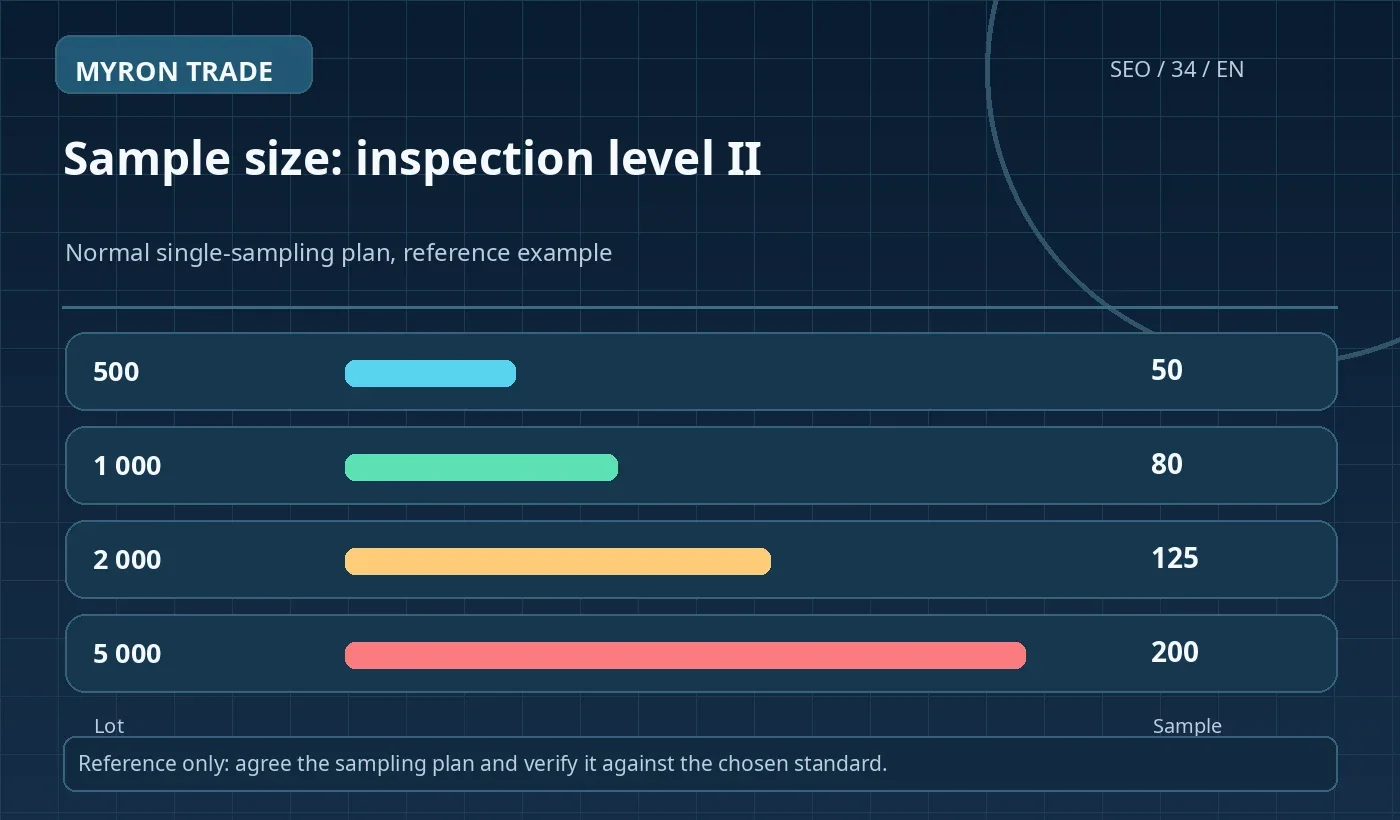
This is a reference extract from normal single-sampling plans at General Inspection Level II, as commonly presented under ISO 2859-1 / ANSI/ASQ Z1.4. It is not a blanket contract requirement. The final plan must match the applicable standard, product and inspection agreement.
| Finished lot size | Level II code | Sample size | Practical illustration |
|---|---|---|---|
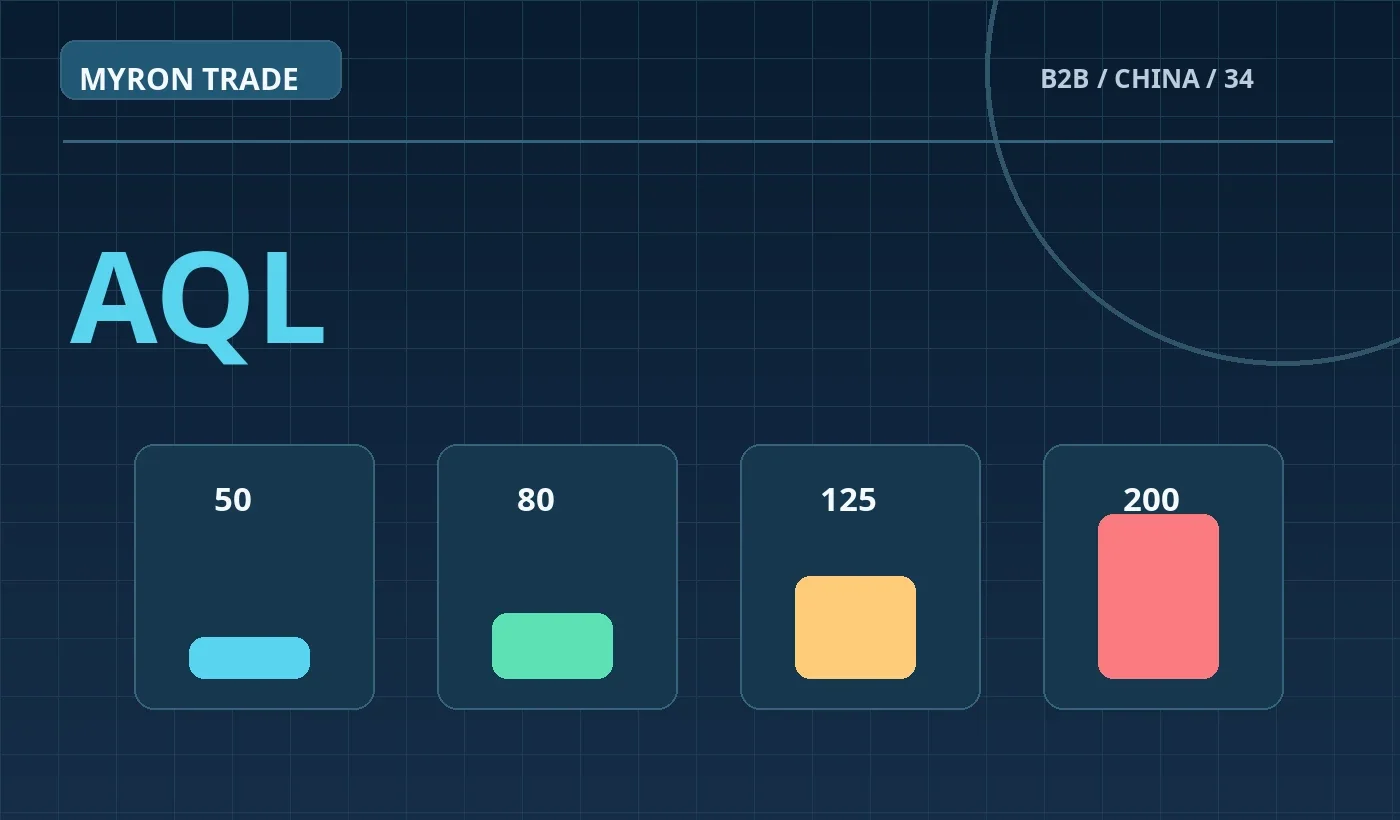
| 281–500 units | H | 50 | Examine 50 units selected across the available lot |
| 501–1,200 units | J | 80 | An order of 1,000 typically calls for 80 units |
| 1,201–3,200 units | K | 125 | For 2,000 units the sample is 125, not 10% |
| 3,201–10,000 units | L | 200 | A lot of 5,000 requires 200 under this plan |
Selection must follow the agreed randomisation method across the actual completed and accessible shipment. If the manufacturer allows the inspector to see only boxes it has chosen, the neat sample-size calculation loses much of its meaning. Any inaccessible pallets, mixed production lots or traceability gaps should be written into the inspection report.
Acceptance and rejection: the numbers behind AQL
For an 80-unit sample under a normal single-sampling plan, example acceptance/rejection counts are AQL 1.0: Ac 2 / Re 3; AQL 2.5: Ac 5 / Re 6; AQL 4.0: Ac 7 / Re 8. Ac is the maximum count that leads to acceptance for the defined defect category; Re is the count at which the lot is rejected. These numbers must be checked against the actual sampling table and classification agreed with the buyer. Critical safety defects often need a separate zero-tolerance rule.
| Defect class | Product example | What the purchase specification must clarify |
|---|---|---|
| Critical | Dangerous wiring or risk of injury | Stop conditions and dedicated safety testing |
| Major | Unit does not power on or fails under load | Functional test, duration and remedial process |
| Minor | Cosmetic mark that may or may not be acceptable | Reference photos, allowable position and size |
Do not add cosmetic scratches and dangerous electrical failures into one undifferentiated defect tally. Also agree whether a table counts defective units or individual defects. Passing an AQL-based inspection is not a substitute for required certification, safety testing or legal market access.
Real MYRON TRADE case: four faulty heaters among the first ten
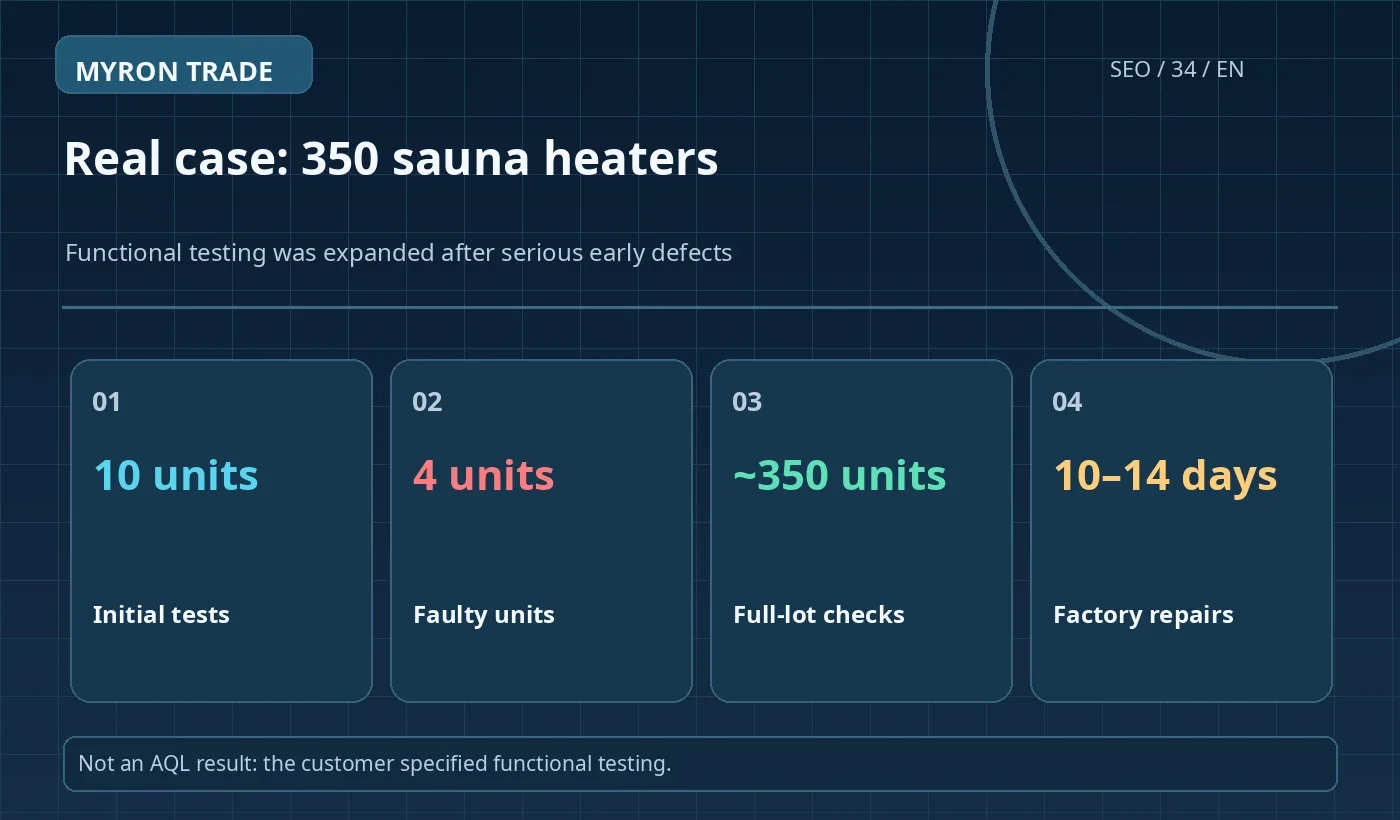
A buyer ordered approximately 350 electric sauna heaters from China. The initial inspection instruction was to test 50 units, powering each heater and assessing its performance. The first ten included four faulty units: some failed to heat, some stopped unexpectedly, others had sensor problems, and one suffered a wiring failure when switched on.
This was the customer’s practical functional-testing programme, not a documented formal AQL inspection. It would be misleading to retrospectively label the result as an “AQL failure”. But it showed a serious risk in continuing with the originally limited check. The customer extended testing to the whole lot. MYRON TRADE added two inspectors; three people spent roughly three working days testing equipment. The factory then spent approximately 10–14 days correcting faults, after which the team checked roughly 350 heaters again. MYRON TRADE also helped negotiate a discount and reimbursement of inspection costs — an outcome specific to that case, not a guaranteed result.
When sampling is reasonable — and when to go further
| Situation | Inspection approach | Reason |
|---|---|---|
| Homogeneous consumer goods, ordinary visual defects | Agreed AQL sampling plan | Statistical lot decision without unpacking every item |
| Complex machinery requiring long test cycles | Dedicated factory test protocol and targeted sampling | A short visual inspection misses operational faults |
| Several dangerous failures found early | Pause shipment approval and reconsider scope | The problem may affect much of the production run |
| Supplier says defects have been fixed | Documented re-inspection | A promise is not evidence of correction |
Request a quality inspection in China
Send the product description, order quantity, specifications, factory address and contact, expected readiness date and the defects you cannot accept. Approved samples, drawings, test methods and photos of known failures make the task clearer. MYRON TRADE can arrange on-site checks, photo/video evidence and discussions with the supplier. The owner’s working price guide is approximately USD 330–350 for an inspection, plus travel if needed; more extensive testing and repeat visits require a separate quote.
See MYRON TRADE’s quality-control service and, where the seller itself is uncertain, manufacturer verification. Reference sampling figures are also explained in QIMA’s ISO 2859 guide. Always confirm the applicable edition and acceptance plan before the inspector starts.
Discuss your China sourcing task with MYRON TRADESend the product details, factory location and target date. We will confirm the scope and provide a tailored quotation.
Message MYRON TRADE on WhatsAppMYRON TRADE services on this topic



Need help with this topic?
Describe the task in your own words — even if you are not sure which service you need. A manager will clarify the details and suggest how to proceed and what it will cost.
What happens next
- A manager clarifies the detailsin the channel you choose
- We propose a work plan and a quotewith an estimate of cost and timing
- We agree the terms and startcontract with our company in Shanghai