
Electric Double-Decker Tourist Busfrom China to Europe — Done Right
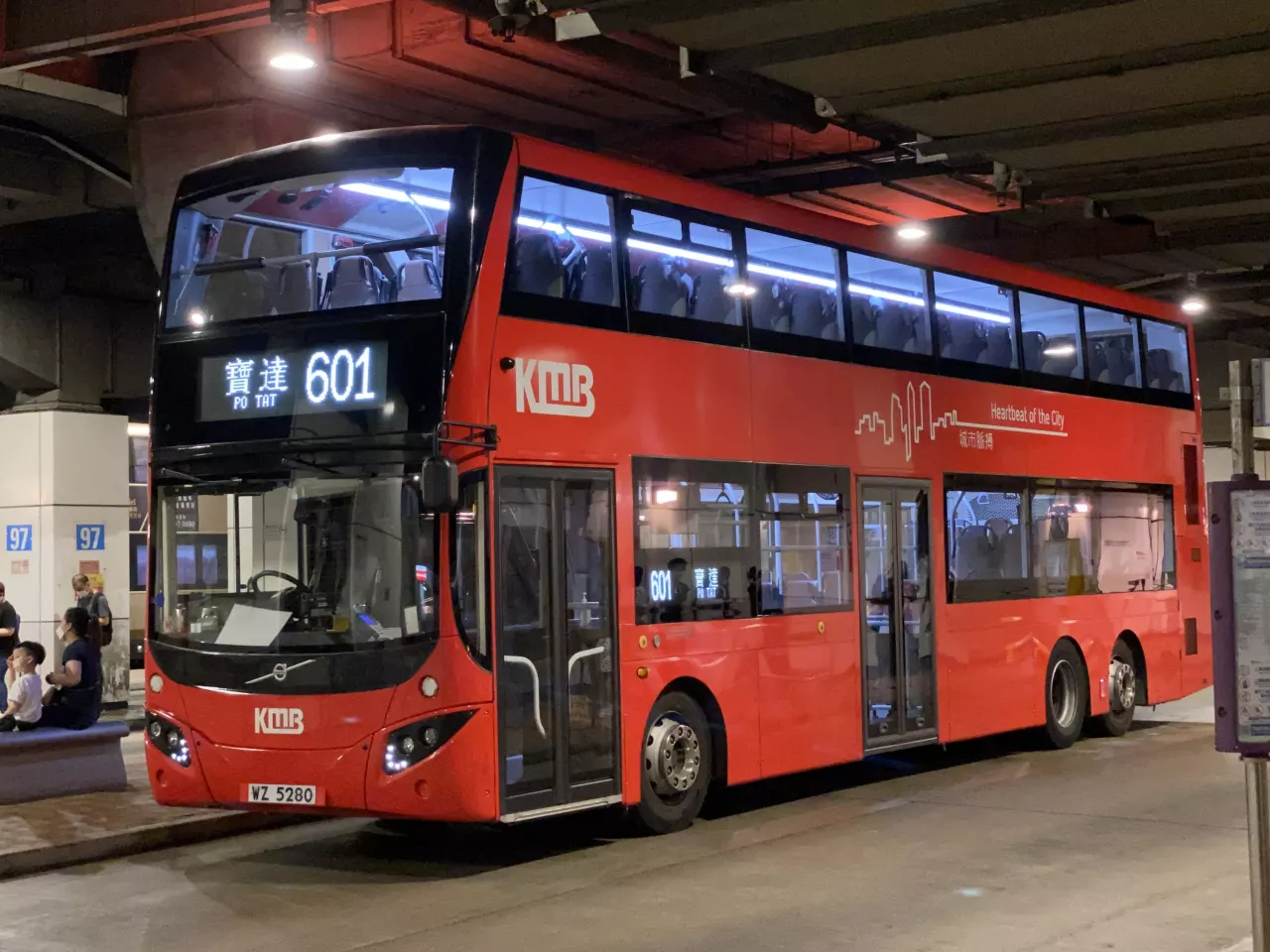
New Reality 2026–2027
Real economics, customs calculations, Germany homologation and honest comparison with the European market. Practical experience from the field.
~24%share of e-buses in new EU registrations, 2025 90%city buses zero-emission target by 2030 +9.7%growth in tourist spending Europe, 2025 €300k+average new e-bus price in Europe Table of Contents
- Why 2026–2027 Is the Right Window
- EU Bus Market: What Is Happening
- Why Look at China
- Complete Cost Breakdown
- Customs, Duties & VAT
- Why Germany Is the Best Entry Point
- Homologation: What Is Critical
- Final Budget Scenarios
- China vs European Market
- Who Is This Right For
- Our Process
- FAQ
Market Context
Why 2026–2027 Is the Right Window to Enter
The European market is no longer debating whether the shift to low-emission transport will happen. The question has moved on: who will adapt first and at what cost.
Tourism is recovering strongly. International arrivals in Europe grew by 4.9% year-on-year in early 2025, overnight stays by 2.2%, and tourist spending by approximately 9.7%. Cities across Europe — London, Amsterdam, Paris, Berlin — are tightening their Low Emission Zones and restricting diesel-powered tour vehicles.
The EU regulatory picture is clear: the Clean Vehicles Directive sets mandatory minimum targets for zero-emission bus procurement for 2026–2030. Target for new city buses: 90% zero-emission by 2030, 100% from 2035 onward.
2026–2027 is the entry window before mass saturation arrives. Operators who act now gain lower acquisition cost, first-mover green credentials, and compliant fleets for the next decade.
EU Bus Market
What Is Happening in the EU Bus Market Right Now
According to ACEA, approximately 700,000 buses on EU roads in 2024. New registration data tells a much stronger story:
| 3.5%Share of e-buses in total EU fleet, 2024 | 13%E-bus share new registrations Q1 2024 | 19.9%E-bus share new registrations Q1 2025 | 23.8%E-bus share full year 2025 |
In a single year, new electric bus registrations in the EU went from 13% to nearly 24%. Germany — the largest European bus market — was among the strongest performers.
“The electric bus is no longer an experiment. It is the direction of the market — for tourist operators, the question is no longer if, but when.”
Open-top electric double-decker tourist bus — ideal for sightseeing and hop-on hop-off in European tourist centres.
The Case for China
Why Operators Are Looking at China for Electric Buses
The answer is simple: entry cost. A new electric double-decker in Europe — especially in a tourist configuration — often sits between €400,000 and €550,000. Custom builds exceed €600,000.
Chinese manufacturers can offer comparable platforms at significantly lower FOB prices — because of lower labour costs, vertically integrated supply chains, massive domestic EV scale, and direct manufacturer pricing without European dealership margins.
Find the right platform, prepare the bus correctly, and execute the import professionally — and you achieve a genuine economic advantage over buying locally. The keyword is professionally.
Modern electric bus assembly line at a Chinese manufacturer. Large-scale production translates into lower per-unit cost.
Full Economics
Complete Cost Breakdown: Every Line Item
Operators see the factory price and miss everything between China factory gate and European road registration. Below is the full picture for 2026–2027.
1. Vehicle Purchase Price (ex-works China)
| Configuration | Price Range |
|---|---|
| Standard — 280 kWh, closed deck | from €225,000 |
| Mid-range — 320–350 kWh, tourist spec | €240,000 – €270,000 |
| Premium — 380–420 kWh, open-top, EU prep | €270,000 – €300,000 |
2. Pre-Shipment Technical Preparation (China)
The single most important step — often skipped. Preparing in China costs a fraction of fixing issues in Germany. Covers: lighting adaptation to ECE, emergency exit compliance, HV safety dossier, technical documentation.
Budget: €3,500 – €8,000
3. Ocean Freight (China → Europe)
A double-decker at ~11.0 × 2.55 × 4.2 m requires RoRo shipping — no standard container fits. Best ports: Hamburg, Bremerhaven, Zeebrugge, Antwerp.
| Freight Component | Estimated Cost |
|---|---|
| Ocean freight (RoRo), port-to-port | €16,500 – €18,500 |
| Port handling, unloading, storage | €2,000 – €3,500 |
| Oversized road transport to technical centre | €1,500 – €3,000 |
4. Import Duty + VAT (Germany)
CN code 8702 4000 — electric bus, 10+ passengers. EU MFN duty: 10%. German import VAT: 19%.
| Calculation (CIF €280,000) | Amount |
|---|---|
| CIF value at German customs | €280,000 |
| Customs duty (10%) | €28,000 |
| Import VAT (19%) | €58,520 |
| Total at customs (before VAT recovery) | €86,520 |
VAT recovery available: German legal entities with Vorsteuerabzugsberechtigung offset import VAT. The real non-recoverable burden is customs duty only — ~€28,000 on €280,000 CIF.
5. Homologation & Individual Approval (Germany)
The central technical step. Budget €12,000 – €30,000 depending on vehicle preparation. See dedicated section below.
The real price is not the factory price. It is the factory price plus every step between the factory and your garage.
We calculate every line item upfront — no surprises at customs or at the inspection centre.
Customs & Tax
Customs Duties, Import VAT and Tax Structure
EU Anti-Dumping Duties — Does This Apply to Buses?
Critical question. The EU’s countervailing duties on Chinese BEVs introduced in 2024 apply specifically to passenger cars (CN chapter 8703) — not commercial vehicles or buses (CN 8702 4000). Electric buses carry the standard 10% MFN rate. Verify at time of import as the regulatory environment continues to evolve.
CIF vs Ex-Works: Why It Matters
EU customs duty is calculated on the CIF value — invoice price + insurance + ocean freight. Not on the ex-works factory price alone. This adds typically €18,000–€22,000 to the duty calculation base.
Entry Point
Why Germany Is the Best Entry Point for This Project
| 1 | Clear and documented legal pathway §21 StVZO + national individual approval under Article 45 of EU Regulation 2018/858. Designed for exactly this use case: a new vehicle from outside the EU without an existing EU type approval. |
| 2 | World-class technical services DEKRA, TÜV Nord, TÜV Süd, GTÜ — experienced in homologation, imports, conversions, UNECE/ECE testing. Your project is handled by engineers who understand the requirements. |
| 3 | Scalable reference documentation First bus forms reference dossier. Second and third bus of same configuration: faster approval and lower cost. KBA explicitly acknowledges reduced burden for approximately identical vehicles. |
| 4 | Central European logistics hub Hamburg and Bremerhaven are Europe’s most efficient RoRo ports. A bus registered in Germany can operate legally across all EU member states. |
Technical Approval
Homologation: What Is Critical and What It Costs
For a new vehicle from China without EU type approval, the pathway in Germany is national individual vehicle approval (Einzelgenehmigung) under Article 45 of EU Regulation 2018/858. This is the standard, officially documented path.
| Scenario | Budget Range |
|---|---|
| Well-prepared vehicle — pre-screened in China, documentation complete | €8,000 – €15,000 |
| Standard case — some adaptations needed (lighting, doors, documentation) | €15,000 – €25,000 |
| Complex case — significant modifications required after arrival | €25,000 – €45,000+ |
The single most important rule: prepare the vehicle for European requirements before it leaves China. A lighting adaptation that takes 2 days in a Chinese factory takes 2 weeks at a German workshop at European labour rates.
Full Budget
Complete Landed Budget Scenarios for One Bus
Two worked scenarios for a single electric double-decker tourist bus, landed and registered in Germany in 2026–2027.
Scenario A Well-prepared, entry spec
| Scenario B Realistic case, premium spec
* Import VAT (19%) not shown — recoverable for German legal entities with Vorsteuerabzug. For comparison: A new electric double-decker from a European manufacturer currently costs €400,000–€550,000. The China import route represents a genuine saving of €100,000–€200,000 per vehicle, even after all landed costs. Market Comparison China Import vs Buying in Europe: Honest Comparison
|


Need help with this topic?
Describe the task in your own words — even if you are not sure which service you need. A manager will clarify the details and suggest how to proceed and what it will cost.
What happens next
- A manager clarifies the detailsin the channel you choose
- We propose a work plan and a quotewith an estimate of cost and timing
- We agree the terms and startcontract with our company in Shanghai
